Prosecco DOC Rosé combines 85–90% Glera with 10–15% Pinot Nero vinified as red wine. The blend undergoes a sparkling process in sealed tanks lasting at least 60 days. Its pink color and its bubbles come from different stages, not a splash of color at bottling.
The pink is what you notice first. The question of how it got there usually comes later, perhaps when somebody suggests rosé is simply the white wine with a prettier finish.
Prosecco DOC Rosé has its own grape blend and production requirements. Its color and sparkle come from different stages, and both deserve a little credit.
First comes the color
Pinot Nero is the Italian name for Pinot Noir. Its red-wine vinification allows color from the grape skins to enter the wine. That component is combined with Glera within the permitted proportions: 10–15% Pinot Nero and 85–90% Glera.
Those are the DOC Rosé limits. They do not tell you the exact percentage used in every brand or vintage.
Then comes the sparkle
The rosé blend goes through natural fermentation in sealed pressure tanks. The production specification requires a processing period of at least 60 days for Prosecco DOC spumante rosé. Carbon dioxide produced during fermentation is retained under pressure.
That is the Martinotti or Charmat method. It gives you an explanation for the bubbles without confusing the color-making stage with the sparkling stage.
Does pink mean sweet?
No. Prosecco DOC Rosé can be made in Brut Nature, Extra Brut, Brut and Extra Dry styles. Read the sweetness term as well as looking at the color.
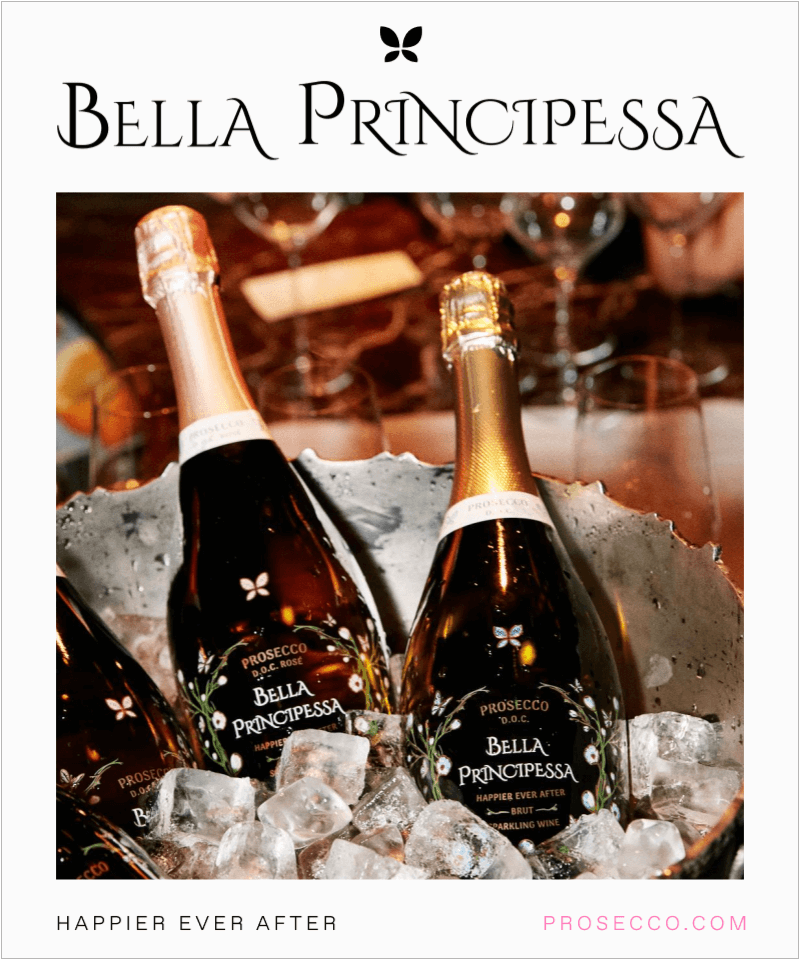
Bella Principessa's Prosecco DOC Rosé is Brut. Its white Prosecco DOC is Brut. For choosing between those expressions, our Prosecco sweetness guide explains the labels in plain language.
To see where rosé fits in the category, read Prosecco rosé explained. For the grape detail, see Pinot Noir and Prosecco.
Sources
Prosecco DOC production regulations, Articles 2 and 5; consortium winemaking guide.