What are the recommended food pairings for Prosecco rosé?

The short answer

Prosecco rosé can work with light savory dishes, seafood and appetizers. Choose for the bottle's sweetness and the finished dish, including its sauce and seasoning. Pink is not a food group, so you do not need a pink menu to make the pairing feel considered.

Answered by Michael Goldstein · Founder, Bella Principessa
Updated on

The full answer

Prosecco rosé can work with light savory dishes, seafood and appetizers. Choose for the bottle's sweetness and the finished dish, including its sauce and seasoning. Pink is not a food group, so you do not need a pink menu to make the pairing feel considered.

It begins innocently enough with a pink bottle. Then you wonder whether the food should match, and suddenly salmon and strawberries have been given jobs they never applied for.

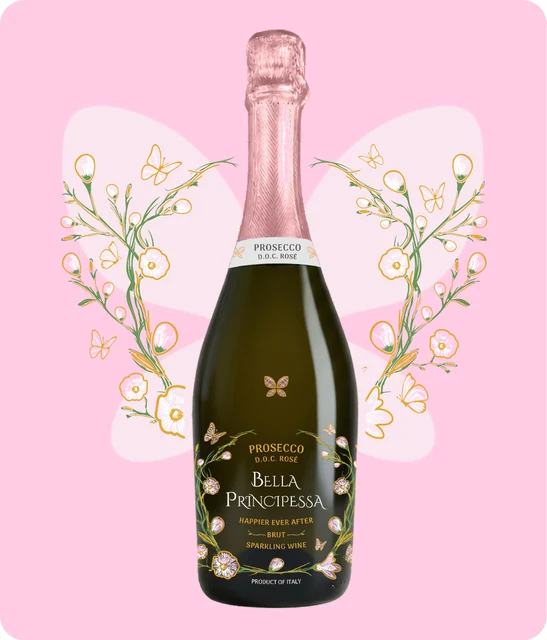
Choose the menu for how it tastes. Bella Principessa Prosecco DOC Rosé is Brut, which gives you useful information about sweetness. The color can take care of looking lovely without directing the whole meal.

Prosecco rosé food pairings to try

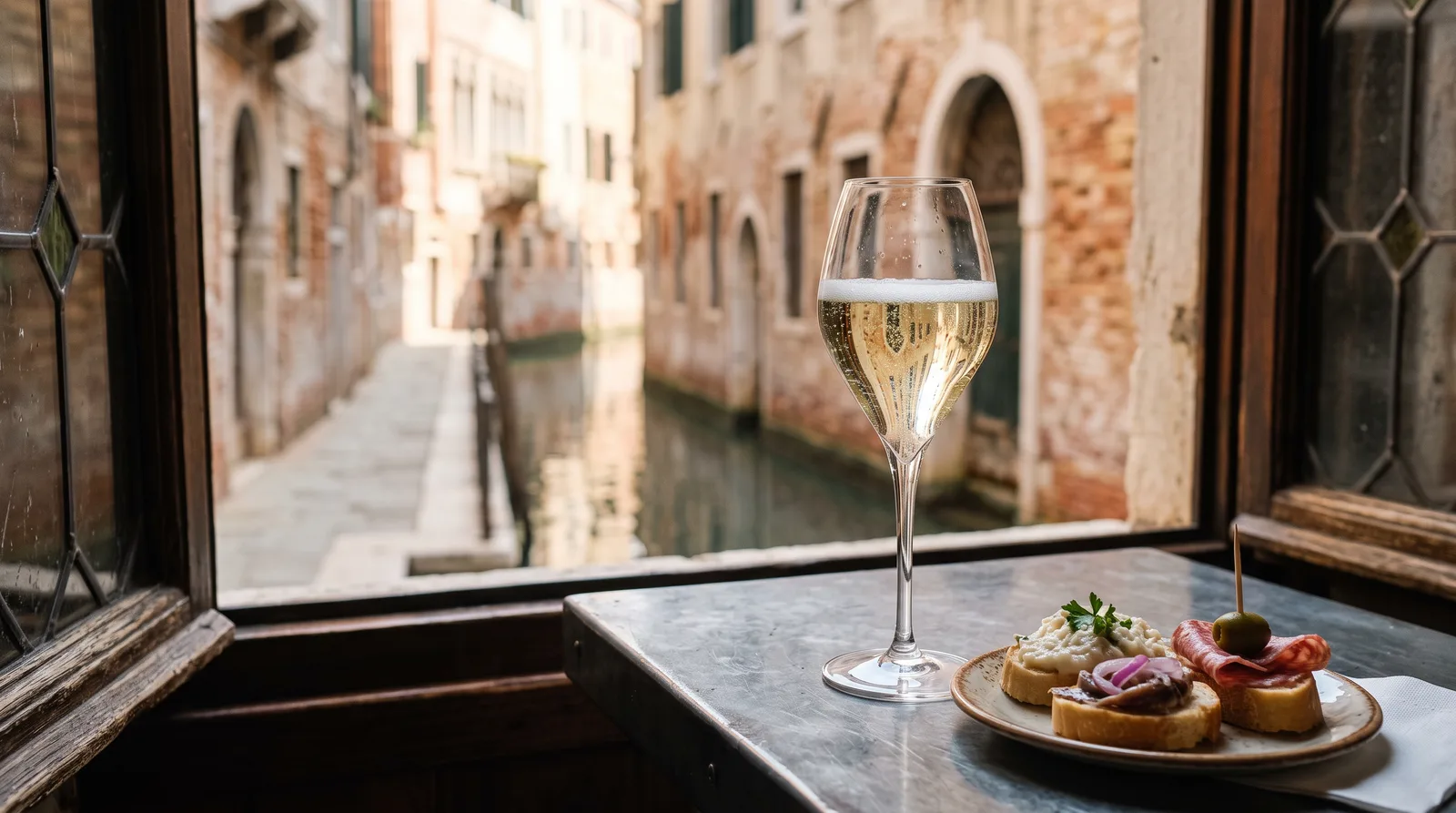
For a light menu, consider lemon-dressed shrimp, tomato and mozzarella, or small vegetable fritters. Those are starting points to explore, not a set menu or a claim of documented Bella Principessa tasting tests.

Taste the dish with its dressing and seasoning in place. A tomato salad changes when the dressing is sharp; seafood changes when it arrives with a sweet glaze. The main ingredient alone does not describe the experience.

Read the sweetness category before pairing

Bella Principessa’s rosé and white are both Brut. They are different expressions within the same sweetness category; that category does not establish identical taste or exact sugar content. Consider the wine and the finished dish together.

That does not mean rosé belongs automatically with dessert. A very sweet dish can change how a wine tastes beside it. Chili can change the perception too. WSET’s pairing principles are useful here because they explain the interaction rather than assigning every food a permanent partner.

Try the combination before making it a rule

Take a small sip, taste a bite, then try the wine again. Notice whether you like the combination more or less. If it does not work for you, change something. Dinner is a perfectly reasonable place to have a preference.

The practical goal is a meal you enjoy serving and eating. A pairing suggestion earns its place by helping with that decision, not by sounding impressive on the menu.

For the wider menu, see Prosecco food pairings. For the label, read whether Prosecco rosé is dry or sweet; for the wine itself, start with Prosecco rosé explained.

Source

WSET food and wine pairing principles. The suggested dishes are editorial ideas, not documented Bella Principessa pairing tests.

The long read, in the JournalPink Prosecco: how to choose a good Prosecco Rosé6 min read →

Keep this answer

Print it, save it, or send it to whoever asked.

More in this topic

Prosecco Rosé

What is Prosecco rosé?

Prosecco DOC Rosé is an Italian sparkling rosé made from Glera and Pinot Nero. The red-wine component gives it its pink color; fermentation creates the bubbles. Pink may catch your eye, but check the sweetness term before falling in love with the bottle.

The two grapes, the bubbles and Millesimato
Is Prosecco Rosé sweet or dry?

Usually not. Prosecco Rosé can only be made in the four driest sweetness styles: Brut Nature, Extra Brut, Brut and Extra Dry. In stores you’ll mostly see Brut, which is dry, or Extra Dry, which is slightly sweeter. The pink color comes from Pinot Noir grapes, not from sugar.

The four styles, and how to pick a dry one
What’s the difference between Prosecco and Prosecco Rosé?

Prosecco Rosé is Prosecco with 10 to 15% Pinot Noir added, which gives it its pink color and a light red-berry flavor. By the rules it must be sparkling, carry a vintage year, and spend at least 60 days fermenting in the tank (white Prosecco needs 30). It’s never made in the sweetest styles.

The two side by side, and which to pour
Is “Prosecco Rosé” also referred to as “Pink Prosecco”?

Yes. Pink Prosecco is an informal name for Prosecco rosé. Look for the complete Prosecco DOC Rosé designation on the bottle: pink colour alone does not identify the wine or tell you its sweetness.

The nickname, the official name and sweetness
What Does Pinot Noir Have to Do with Prosecco?

Pinot Noir, called Pinot Nero in Italian, supplies the red-wine component in Prosecco DOC Rosé: 10–15%, alongside 85–90% Glera. It may also be used in white Prosecco DOC when vinified as white wine. The same grape can have two quite different roles.

Its role in rosé, and in white Prosecco
How is Prosecco rosé made?

Prosecco DOC Rosé combines 85–90% Glera with 10–15% Pinot Nero vinified as red wine. The blend undergoes a sparkling process in sealed tanks lasting at least 60 days. Its pink color and its bubbles come from different stages, not a splash of color at bottling.

How the color and the sparkle are made
What are the key characteristics of Prosecco rosé?

Prosecco DOC Rosé is a pink, fully sparkling wine made mostly from Glera with 10 to 15% Pinot Noir. Expect fine bubbles, floral aromas, strawberry and raspberry fruit and a crisp finish. It ranges from bone dry to off-dry, and every bottle carries a vintage year.

Color, bubbles, vintage, dryness and food
What does DOC mean on rosé?

On an Italian rosé label, DOC means Denominazione di Origine Controllata: controlled designation of origin. It identifies a wine made under the rules of a named Italian appellation. DOC alone does not tell you that the rosé is Prosecco, sparkling or sweet. Read the complete wine name and style words beside it.

What DOC on rosé tells you, and what it doesn’t
Where is Prosecco rosé produced?

Prosecco DOC Rosé is an Italian wine whose defined grape-growing area spans nine provinces across Veneto and Friuli Venezia Giulia in northeastern Italy. It shares the Prosecco DOC geographical designation with white Prosecco DOC. Pink changes the blend, not the country on the map.

Where it’s made, and whether it’s ever DOCG
What is the first fermentation process for Prosecco rosé?

In Prosecco rosé’s first fermentation, yeast turns grape sugars into alcohol to make the base wines. Glera is vinified as white wine and Pinot Nero as red wine. They are then blended before the later tank fermentation that retains the bubbles. The pink and the sparkle have different beginnings.

The base wines, then the sparkling stage
What distinguishes Prosecco rosé from other sparkling wines?

Prosecco DOC Rosé is an Italian sparkling rosé with a defined Glera and Pinot Nero blend and its own production rules. Other sparkling rosés may use different grapes, origins and methods. The shared pink color does not make them the same wine or tell you how sweet they are.

What defines Prosecco DOC Rosé, and what to compare

All 113 Prosecco questions →

Share a moment.
One sip at a time.
Made in Italy.

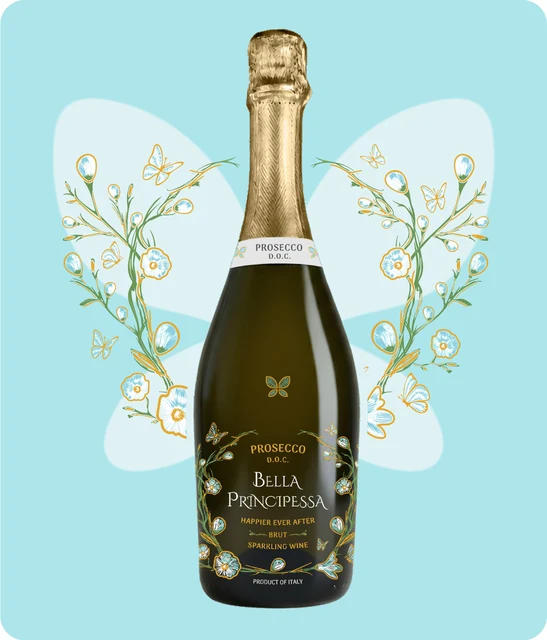
Bella Principessa Prosecco D.O.C. on a blue butterfly card Bella Principessa Prosecco D.O.C. Rosé on a pink butterfly card