What is the first fermentation process for Prosecco rosé?

The short answer

In Prosecco rosé’s first fermentation, yeast turns grape sugars into alcohol to make the base wines. Glera is vinified as white wine and Pinot Nero as red wine. They are then blended before the later tank fermentation that retains the bubbles. The pink and the sparkle have different beginnings.

Answered by Michael Goldstein · Founder, Bella Principessa
Updated on

The full answer

In Prosecco rosé’s first fermentation, yeast turns grape sugars into alcohol to make the base wines. Glera is vinified as white wine and Pinot Nero as red wine. They are then blended before the later tank fermentation that retains the bubbles. The pink and the sparkle have different beginnings.

A pink glass makes the finished wine look wonderfully uncomplicated. Behind it, two grapes have had rather different afternoons in the cellar.

First, make the base wines

Glera is made into white wine. Pinot Nero, also called Pinot Noir, is vinified as red wine, with skin contact supplying colour. Yeast converts fermentable grape sugars into alcohol during this first fermentation.

For Prosecco DOC Rosé, the blend must contain 85–90% Glera and 10–15% Pinot Nero vinified as red wine. Those are category requirements, rather than the exact recipe or private cellar timetable for every producer.

Then comes the sparkling stage

The blended base wine undergoes a later fermentation in sealed pressure tanks. Carbon dioxide is retained under pressure, creating the sparkle. DOC Rosé requires a sparkling processing period of at least 60 days; that figure should not be reassigned to the first fermentation.

Our Prosecco rosé production guide follows the complete sequence, while the Martinotti method guide explains the tank stage.

What does that tell you about your bottle?

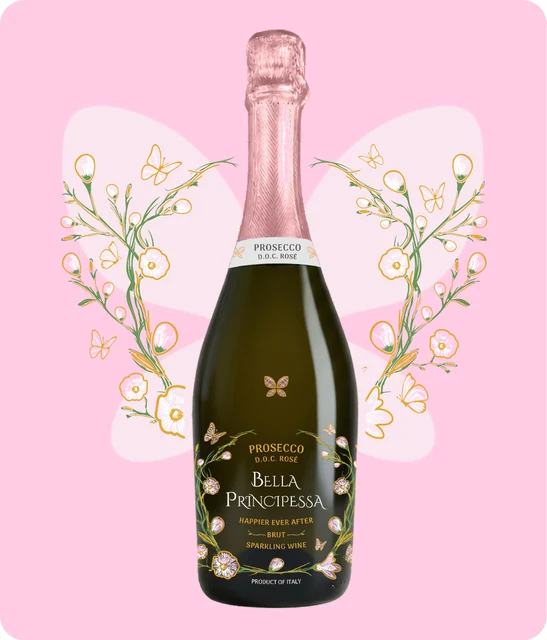
Bella Principessa’s DOC Rosé is Brut. Its blend rules explain the category’s grapes; Brut explains sweetness. Neither supplies an exact fermentation temperature or schedule for the individual wine.

The colour may have caught your eye first. Now you know which part of the process deserves the credit, without making the bubbles answer for everything.

The long read, in the JournalPink Prosecco: how to choose a good Prosecco Rosé6 min read →

Keep this answer

Print it, save it, or send it to whoever asked.

More in this topic

Prosecco Rosé

What is Prosecco rosé?

Prosecco DOC Rosé is an Italian sparkling rosé made from Glera and Pinot Nero. The red-wine component gives it its pink color; fermentation creates the bubbles. Pink may catch your eye, but check the sweetness term before falling in love with the bottle.

The two grapes, the bubbles and Millesimato
Is Prosecco Rosé sweet or dry?

Usually not. Prosecco Rosé can only be made in the four driest sweetness styles: Brut Nature, Extra Brut, Brut and Extra Dry. In stores you’ll mostly see Brut, which is dry, or Extra Dry, which is slightly sweeter. The pink color comes from Pinot Noir grapes, not from sugar.

The four styles, and how to pick a dry one
What’s the difference between Prosecco and Prosecco Rosé?

Prosecco Rosé is Prosecco with 10 to 15% Pinot Noir added, which gives it its pink color and a light red-berry flavor. By the rules it must be sparkling, carry a vintage year, and spend at least 60 days fermenting in the tank (white Prosecco needs 30). It’s never made in the sweetest styles.

The two side by side, and which to pour
Is “Prosecco Rosé” also referred to as “Pink Prosecco”?

Yes. Pink Prosecco is an informal name for Prosecco rosé. Look for the complete Prosecco DOC Rosé designation on the bottle: pink colour alone does not identify the wine or tell you its sweetness.

The nickname, the official name and sweetness
What Does Pinot Noir Have to Do with Prosecco?

Pinot Noir, called Pinot Nero in Italian, supplies the red-wine component in Prosecco DOC Rosé: 10–15%, alongside 85–90% Glera. It may also be used in white Prosecco DOC when vinified as white wine. The same grape can have two quite different roles.

Its role in rosé, and in white Prosecco
How is Prosecco rosé made?

Prosecco DOC Rosé combines 85–90% Glera with 10–15% Pinot Nero vinified as red wine. The blend undergoes a sparkling process in sealed tanks lasting at least 60 days. Its pink color and its bubbles come from different stages, not a splash of color at bottling.

How the color and the sparkle are made
What are the key characteristics of Prosecco rosé?

Prosecco DOC Rosé is a pink, fully sparkling wine made mostly from Glera with 10 to 15% Pinot Noir. Expect fine bubbles, floral aromas, strawberry and raspberry fruit and a crisp finish. It ranges from bone dry to off-dry, and every bottle carries a vintage year.

Color, bubbles, vintage, dryness and food
What does DOC mean on rosé?

On an Italian rosé label, DOC means Denominazione di Origine Controllata: controlled designation of origin. It identifies a wine made under the rules of a named Italian appellation. DOC alone does not tell you that the rosé is Prosecco, sparkling or sweet. Read the complete wine name and style words beside it.

What DOC on rosé tells you, and what it doesn’t
Where is Prosecco rosé produced?

Prosecco DOC Rosé is an Italian wine whose defined grape-growing area spans nine provinces across Veneto and Friuli Venezia Giulia in northeastern Italy. It shares the Prosecco DOC geographical designation with white Prosecco DOC. Pink changes the blend, not the country on the map.

Where it’s made, and whether it’s ever DOCG
What distinguishes Prosecco rosé from other sparkling wines?

Prosecco DOC Rosé is an Italian sparkling rosé with a defined Glera and Pinot Nero blend and its own production rules. Other sparkling rosés may use different grapes, origins and methods. The shared pink color does not make them the same wine or tell you how sweet they are.

What defines Prosecco DOC Rosé, and what to compare

All 113 Prosecco questions →

Share a moment.
One sip at a time.
Made in Italy.

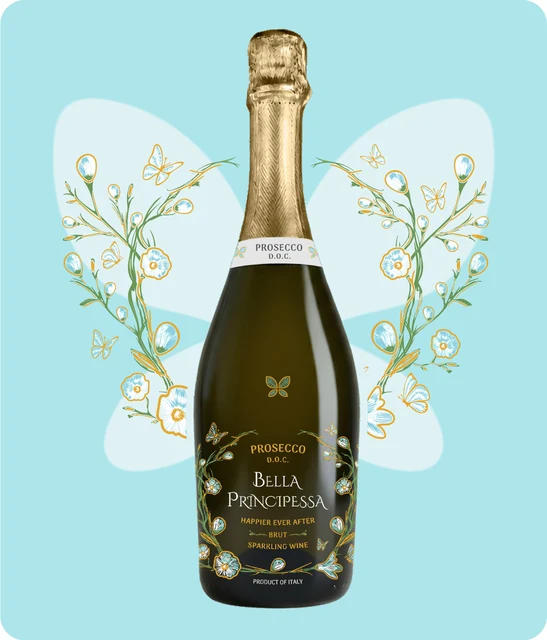
Bella Principessa Prosecco DOC on a blue butterfly card Bella Principessa Prosecco DOC Rosé on a pink butterfly card