
Extra Dry is sweeter than Brut. Yes, really. A short, slightly indignant guide to sweetness, Champagne, and the holiday articles that never compare like with like.
The short answer
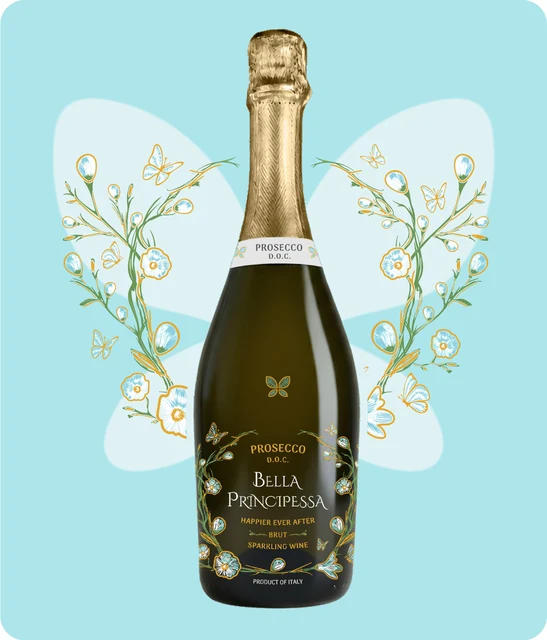
Brut is the dry one. “Extra Dry”, confusingly, is the sweeter one. Bella Principessa Prosecco D.O.C. Brut is Brut.
Every December, sparkling wine gets the family seating plan treatment. Champagne goes on the top table, next to the people who know when to stop. Prosecco is seated near the kids’ table, beside the uncle on his third glass. Then January arrives, and everyone is told to feel bad about all of it.
The advice is always the same. Readers should “drink better.” Better, it turns out, usually means more expensive. The method is the same too: line up a sweet Prosecco against a dry Champagne, notice that one of them is sweeter, and draw conclusions about the kind of person who drinks it. It is a bit like comparing a dessert with a starter and announcing that the dessert has a sugar problem.
What those articles rarely mention is printed on both bottles. Prosecco and Champagne use the same sweetness words, set by the same EU rules. Read the label, and most of the drama goes away.
The Brut Truth
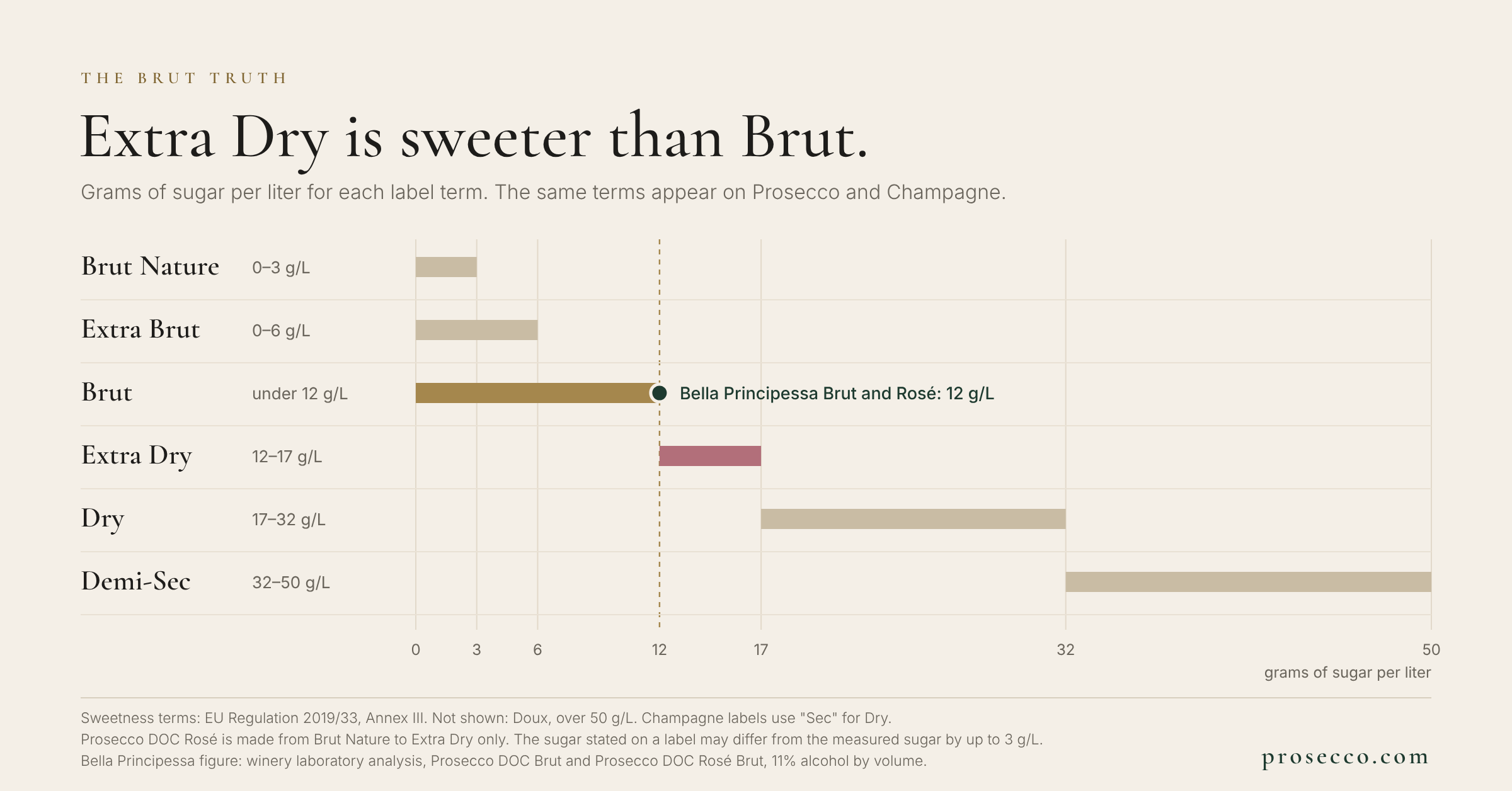
Extra Dry is sweeter than Brut.
Grams of sugar per liter for each label term. The same terms appear on Prosecco and Champagne. The gold marker shows where both Bella Principessa wines sit.
Sweetness terms: EU Regulation 2019/33, Annex III. Not shown: Doux, over 50 g/L. Champagne labels use “Sec” for Dry.
Prosecco DOC Rosé is made from Brut Nature to Extra Dry only. The sugar stated on a label may differ from the measured sugar by up to 3 g/L.
Bella Principessa figure: winery laboratory analysis, Prosecco DOC Brut and Prosecco DOC Rosé Brut, 11% alcohol by volume.
prosecco.comIf you only read one bit
- Extra Dry is sweeter than Brut. Brut means under 12 grams of sugar per liter.3 Extra Dry means 12 to 17. Whoever named these had a sense of humor, or a grudge.
- Prosecco and Champagne use the same sweetness terms, set by EU wine labelling rules. Same words, same numbers.
- In a dry sparkling wine, most of the calories come from alcohol, not sugar. Prosecco DOC is typically around 11% alcohol, Champagne around 12%.
The words on the label
EU rules define each term by the sugar left in the wine, in grams per liter. We have translated that into a 5-ounce glass, the standard US pour, because that is how wine is actually served. Nobody orders it by the liter.
| Label term | Sugar per liter | Sugar in a 5 oz glass | How it tastes |
|---|---|---|---|
| Brut Nature | 0 to 3 g | under 0.5 g | Bone dry |
| Extra Brut | 0 to 6 g | under 1 g | Very dry |
| Brut | under 12 g | under 1.8 g | Dry |
| Extra Dry | 12 to 17 g | 1.8 to 2.5 g | Off-dry |
| Dry (Champagne: Sec) | 17 to 32 g | 2.5 to 4.7 g | Noticeably sweet |
| Demi-Sec | 32 to 50 g | 4.7 to 7.4 g | Sweet |
| Doux (Champagne only) | over 50 g | over 7.4 g | Very sweet |
White Prosecco DOC is made from Brut Nature to Demi-Sec. Prosecco DOC Rosé is made from Brut Nature to Extra Dry only. Under EU rules, the sugar stated on a label may differ from the measured sugar by up to 3 grams per liter.
Why “Extra Dry” is the sweet one
Blame history. When sparkling wine was routinely sweet, terms such as Sec and Extra-Sec (“Extra Dry”) described wines that were dry by the standards of the time, which were not demanding standards. As tastes moved drier, someone needed a word for drier still, and the word they chose was Brut. Nobody went back to tidy up the old names.
So “Extra Dry” now means “a little sweet,” in the same way “business casual” means a blazer. The result, in wine shops across America: someone who wants a dry wine reads “Extra Dry,” feels quietly pleased with themselves, and takes home the sweeter bottle. Most of us have done it at least once.
Which style is your bottle?
Both Bella Principessa wines, the Brut and the Rosé Brut, are Brut on the label, at 12 grams of sugar per liter.1 Here is how they compare with the Extra Dry Proseccos from Mionetto and La Marca. Mionetto publishes 14 to 17 grams for its Extra Drys; the Ontario and Québec liquor boards list La Marca’s at 18.4 Extra Dry sits on the sweeter side of the line.
The Brut Truth
Which style is your bottle?
Bella Principessa’s two Bruts against the Extra Dry Proseccos from Mionetto and La Marca. Green is Brut on the label; grey is Extra Dry.
Figures as each producer publishes them, checked 29 October 2026: Mionetto USA product pages. Mionetto also sells a Prestige Prosecco DOC Treviso Brut, published at 12 g/L. *La Marca publishes no sugar figures. These are from the product listings of the Ontario and Québec liquor boards: La Marca Prosecco, 18 g/L at 11% (LCBO and SAQ); La Marca Prosecco Rosé, 18 g/L at 11% (LCBO). La Marca describes its Prosecco as “crafted in the Extra Dry style”; its Rosé is entered as Extra Dry in trade competitions. La Marca also sells a Demi Sec, not shown.
Bella Principessa: winery laboratory analysis, 11% alcohol by volume. Style ranges: EU Regulation 2019/33, Annex III; a label may differ from measured sugar by up to 3 g/L.
Mionetto and La Marca are trademarks of their respective owners, shown for reference only. No affiliation or endorsement is implied.
prosecco.comProsecco vs Champagne: Brut against Brut
This is the comparison the December articles skip. Set an Extra Dry Prosecco against a Brut Champagne and you are comparing two sweetness styles, not two wines. Brut Prosecco and Brut Champagne sit in the same legal sugar range.
Calories follow the alcohol. In a 5-ounce glass, alcohol supplies roughly 90 calories at 11% and roughly 98 at 12%. The sugar in a Brut adds at most about 7. At the same sugar, a Brut Prosecco comes in about 8 calories lower per glass than a Brut Champagne.2 It is not the kind of fact that makes it onto a holiday gift card, but it is a fact.
What the snobs say (and they’re not all wrong)
The Champagne snob: “Same range isn’t same sugar.”
Fair. Brut covers anything under 12 grams per liter, and plenty of Brut Champagnes sit lower. But a few extra grams per liter add about 4 calories to a 5-ounce glass, and one point less alcohol takes away about 8. Call it a draw, with Prosecco buying the next round.
The Champagne snob: “Grams aren’t the whole story.”
Also fair, and this one deserves a proper answer. Aroma and acidity shape how sweet a wine tastes. Prosecco’s fresh fruit and floral character can make it feel sweeter than a Champagne with the same sugar. That is a difference of style, not a character flaw. The label tells you the sugar; your taste tells you the rest.
The Prosecco snob: “Brut means under 12. Twelve is the line.”
Correct, and Bella Principessa is standing on it, on purpose (more on that below). EU rules allow the sugar stated on a label to differ from the measured sugar by up to 3 grams per liter.
The Prosecco snob: “Not every Prosecco comes in every style.”
Right. Prosecco DOC Rosé stops at Extra Dry. White Prosecco DOC goes all the way to Demi-Sec, for anyone who would like dessert served in a flute.
Bella Principessa: made on the line
According to the winery’s laboratory analysis, both Bella Principessa wines, Prosecco DOC Brut and Prosecco DOC Rosé Brut, contain 12 grams of residual sugar per liter at 11% alcohol by volume. The Brut measures 69 calories per 100 mL, or approximately 102 calories in a 5-ounce glass.1 More on Bella Principessa, and where to buy it in Florida.
“Anyone can strip the sugar out of a wine. It gets thinner, and duller. We make Bella Principessa right on the line between Brut and Extra Dry, because that’s where the fruit and the aroma live, and it’s still Brut.”
Michael Goldstein, founder and creative director, Bella Principessa
How to read the label in ten seconds
- Find the sweetness word. It is usually near the name: Brut, Extra Dry, Dry, Demi-Sec.
- Remember the order, not the meaning. Brut Nature, Extra Brut, Brut, Extra Dry, Dry, Demi-Sec: driest to sweetest. The words will try to mislead you; the order won’t.
- Check the alcohol. In a dry sparkling wine, the percentage tells you more about calories than the sweetness word does. This is the part the January articles tend to leave out.
Then pour whichever one you like. Wine isn’t a virtue test, and the January articles can wait until January.
Pour the Brut
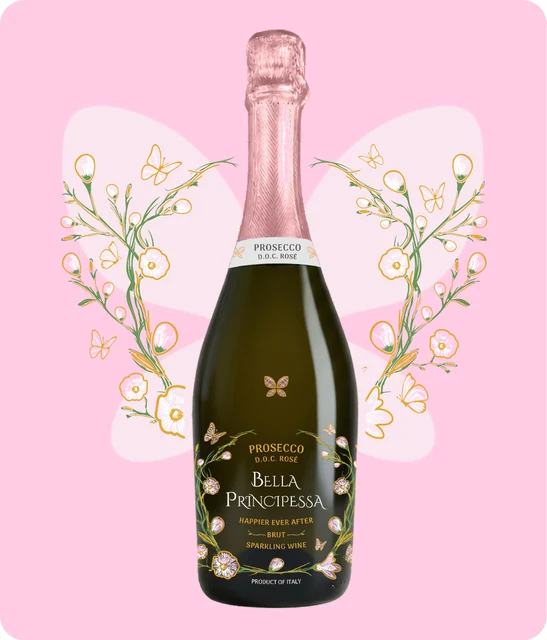
Bella Principessa Prosecco D.O.C. Brut and Rosé Brut. Made in the Veneto, now in South Florida.
Suggested retail price $20.99. Retailers set their own prices.
Planning the holidays? See Prosecco for Thanksgiving, what to bring to Friendsgiving and Prosecco for New Year’s Eve. For more answers, see Is Prosecco a dry or sweet wine? and What is the difference between Prosecco and Champagne?
Questions people actually ask
Is Extra Dry Prosecco sweet?
A little. Extra Dry has 12 to 17 grams of sugar per liter, which makes it sweeter than Brut (under 12) and drier than Dry (17 to 32). The name is the confusing part, not the wine.
Which Prosecco is the driest?
Brut Nature, with 0 to 3 grams of sugar per liter, then Extra Brut, then Brut.
Is Prosecco sweeter than Champagne?
Not by label. Both use the same sweetness terms and the same sugar ranges. A Brut Prosecco and a Brut Champagne sit in the same range. An Extra Dry Prosecco is sweeter than a Brut Champagne because it is a sweeter style, not because it is Prosecco.
How many calories are in a glass of Prosecco?
For a Brut Prosecco at 11% alcohol, roughly 95 to 105 calories in a 5-ounce glass, most of it from alcohol.2 Bella Principessa Prosecco DOC Brut measures 69 calories per 100 mL, approximately 102 per 5 ounces.1
Is Bella Principessa Brut or Extra Dry?
Brut. Both Bella Principessa wines, Prosecco DOC Brut and Prosecco DOC Rosé Brut, measure 12 grams of residual sugar per liter according to the winery’s analysis.1
Sources
- EU Regulation 2019/33, Annex III: sweetness terms for sparkling wine
- EU Regulation 2019/33, Article 47: sugar indication and 3 g/L tolerance
- Philadelphia Inquirer: Who put the “brut” in Champagne
- WineAmerica: TTB serving size for wine (5 fl oz)
For journalists: download the Brut Truth chart (PNG), free to use with credit to prosecco.com. Samples, high-resolution images and interviews with Michael Goldstein are available on request from the press office.
Notes
- Bella Principessa figures are typical values from the producer’s technical analysis: residual sugar and alcohol for Prosecco D.O.C. Brut and Prosecco D.O.C. Rosé Brut; calories for Prosecco D.O.C. Brut only (they do not apply to the Rosé). Values can vary slightly from vintage to vintage. 100 ml is about 3.4 fl oz; a 5 oz glass is about 148 ml.
- General calorie figures are estimates from standard values (alcohol 0.789 g/ml at 7 calories per gram, sugar 4 calories per gram), not laboratory measurements of any particular wine. A measured figure for a specific wine, which also counts components such as glycerol, can be higher. Calorie information is given to explain labels; it is not a health, diet or weight-loss claim.
- Sweetness terms and sugar ranges: EU Regulation 2019/33, Annex III. Under Article 47, the sugar stated on a label may differ from the measured sugar by up to 3 g/L.
- Other producers’ figures are as each producer publishes them, or as listed by the LCBO and SAQ where the producer publishes none, checked 29 October 2026. They may have changed since. Mionetto and La Marca are trademarks of their respective owners, shown for reference only; no affiliation or endorsement is implied.
Product information only; no health claim is made. Please enjoy responsibly; for adults of legal drinking age.