
The verdict, occasion by occasion
| Occasion | Better pick | Why |
|---|---|---|
| Mimosas, Bellinis, spritzes | Prosecco | Its fresh fruit suits juice and bitters; Champagne’s toasty notes disappear under orange juice |
| A party or wedding toast | Prosecco | Same celebration, more bottles for the budget |
| Aperitif before dinner | Either | Prosecco is lighter and livelier; Champagne is more serious |
| Fried food, salty snacks, sushi | Prosecco | Bright bubbles and fruit cut through salt and oil |
| Roast chicken, cream sauces, aged cheese | Champagne | More body and depth from bottle aging |
| One bottle that is the main event | Champagne, if that’s what you love | Complexity is the point |
Paying more for Champagne doesn’t make a mimosa better. The orange juice wins either way.
Why they taste so different
Champagne gets its bubbles from a second fermentation in each bottle, then rests on its yeast for at least 15 months. That’s where the brioche and toast come from. Prosecco gets its bubbles in a large pressurized tank, which keeps the grape’s green apple, pear and white-flower aromas front and center. Prosecco vs Champagne: every difference
Is Champagne better quality?
It’s more expensive to make, because bottle aging takes time and labor. That makes it different, not automatically better. A well-made Prosecco is exactly what it’s trying to be: young, fresh and fruity.
Which is sweeter or stronger?
Both use the same sweetness words, and Brut means dry in either. Is Prosecco sweet? Champagne usually runs about 12% alcohol; most Prosecco is 11 to 11.5%. Prosecco alcohol content
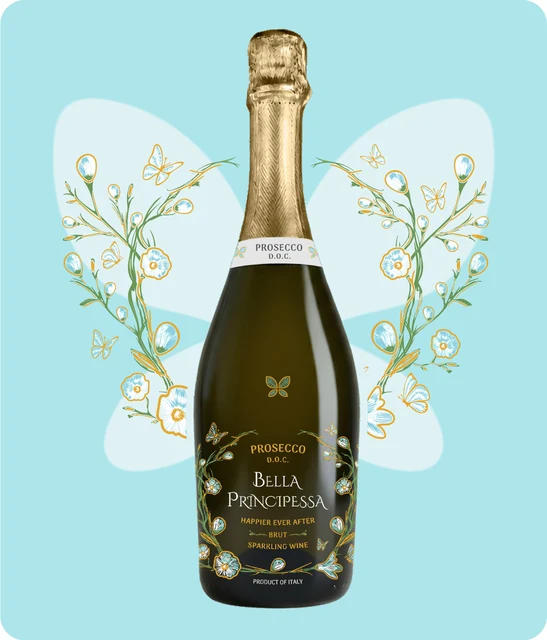
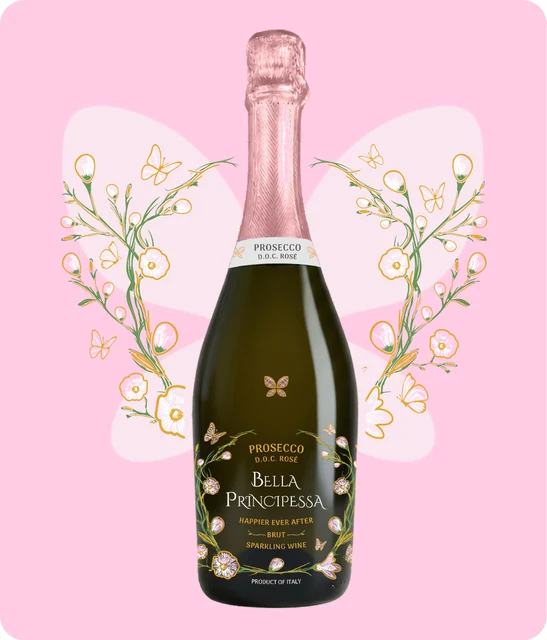
For the moments where Prosecco wins, we make Bella Principessa Prosecco DOC and Bella Principessa Prosecco DOC Rosé, both Brut.
Related: What is Prosecco? · How many calories are in Prosecco?
Sources: Prosecco DOC consortium · Comité Champagne