What does champagne taste like?

The short answer

Champagne can show citrus, apple, pear and floral aromas, with brioche or toast developing through maturation. Its taste varies with the grapes, blend, age and sweetness. A young, fresh bottle and a mature Champagne need not taste alike, and the name alone does not tell you how sweet the wine will be.

Answered by Michael Goldstein · Founder, Bella Principessa
Updated on

The full answer

Champagne can show citrus, apple, pear and floral aromas, with brioche or toast developing through maturation. Its taste varies with the grapes, blend, age and sweetness. A young, fresh bottle and a mature Champagne need not taste alike, and the name alone does not tell you how sweet the wine will be.

A tasting note promises brioche. You notice citrus. Before you wonder whether everyone else has a more accomplished palate, remember that Champagne does not have one compulsory flavor.

Blend, age and sweetness can produce quite different experiences. Your job is to notice the wine in your glass, not find every word in somebody else’s description.

What can shape its character?

Grape varieties, blending and production all matter. Champagne’s second fermentation takes place in bottles, and maturation on the lees contributes to the finished style. Time and winemaking can therefore be relevant to the aromas and texture described by the producer.

Our Champagne definition gives the production context. It does not mean every bottle must show the same degree of bread-like character or the same fruit impressions.

Does Champagne taste sweet or dry?

Champagne comes in different sweetness styles. A fruity aroma does not establish a sweet finish: read the actual sweetness description, rather than assuming Champagne always tastes dry while Prosecco always tastes sweet.

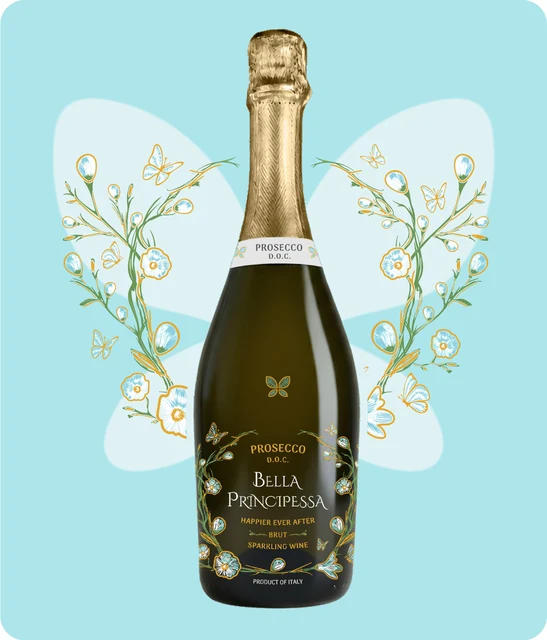
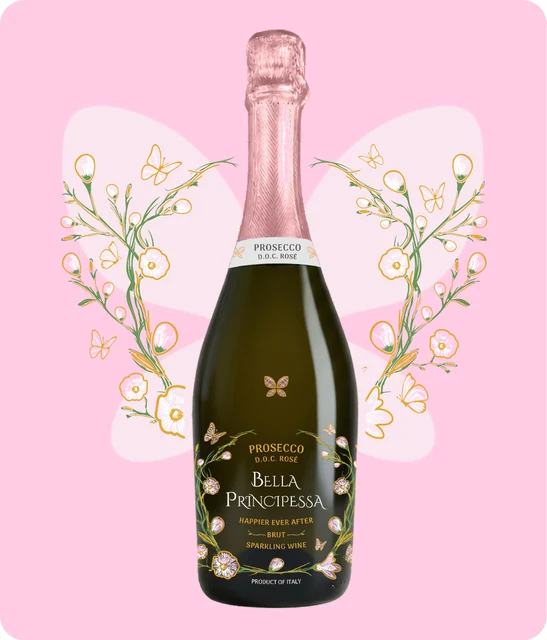
Our Prosecco and Champagne guide compares the two categories. Bella Principessa’s white Prosecco DOC and Prosecco DOC Rosé are both Brut. Their shared sweetness category does not establish identical sugar content or taste, or define every wine in either category.

How should you taste it?

Notice the aromas first, then the freshness, sweetness impression and texture. Taste a little with the food if you are planning a meal. You are choosing what you enjoy, not proving that you can repeat someone else’s tasting note.

For the table, read Champagne food pairings; for your own preference, see choosing Champagne or Prosecco.

Sources

Comité Champagne grape varieties; maturation on lees.

Comité Champagne tasting guide.
The long read, in the JournalProsecco vs Champagne: which to pour, when6 min read →

Keep this answer

Print it, save it, or send it to whoever asked.

More in this topic

Prosecco or Champagne

What is the difference between Prosecco and Champagne?

Prosecco and Champagne have different roots: northeastern Italy and France’s Champagne region. Their grapes and sparkling methods differ too. Prosecco DOC spumante develops its bubbles in tanks; Champagne’s second fermentation happens in bottles. The choice comes down to the particular wine and your taste.

Method, taste, sweetness and alcohol, side by side
Is Prosecco just cheap Champagne?

Prosecco is a distinct Italian wine, with its own origins, grapes and production rules. Calling it cheap Champagne is like judging a holiday in Italy by how closely it resembles France. Choose the wine you enjoy, at a price that works for you.

What you’re really choosing, and your budget
Which is better, Champagne or Prosecco?

The verdict, occasion by occasion
What sells more Prosecco or Champagne?

Official 2025 figures report 667 million bottles bottled for Prosecco DOC and 266.1 million bottles shipped for Champagne. Prosecco DOC's reported volume is larger, but these are different measures. They do not establish a matched retail-sales comparison for the United States or a winner by sales value.

The latest sales figures, and what they don’t show
What is Champagne?

Champagne is a sparkling wine from France's Champagne appellation, made under defined rules that include a second fermentation in bottles. Chardonnay, Pinot Noir and Meunier are its principal grapes. Champagne is one specific wine identity, rather than a general word for every bottle with bubbles.

What makes it Champagne, and how it differs
Is there a place called Champagne?

Yes. Champagne is a wine region in northeastern France, associated with places including Reims and Épernay. The name refers to the region and its appellation wine, rather than one town containing all Champagne producers. Prosecco comes from a different part of Europe, in northeastern Italy.

Where the Champagne region is on the map
Why do the Champagne and Prosecco regions produce sparkling wine?

Growing conditions help shape the grapes in Champagne and Prosecco's regions, while local winemaking traditions and appellation rules shape the wines. Geography influences style; it does not create the bubbles by itself. The sparkling stage is a separate part of production, with different methods used in the two categories.

Climate, bubbles and why the names stay separate
Why can’t you make Prosecco in the UK or the USA?

You can make sparkling wine in the USA or the UK, but a wine grown and produced there cannot qualify as Italian Prosecco DOC or DOCG. Prosecco identifies a particular wine origin and its production requirements. Using a similar grape or fermentation method does not provide that Italian origin.

Why the name is protected, and British fizz
What is the American equivalent of Prosecco?

There is no single American equivalent of Prosecco. American sparkling wines vary in grapes, sweetness and production method, while Prosecco has its own Italian origin and grape requirements. A bottle may fit the same party plan without delivering the same taste.

US sparkling wine vs Prosecco, compared
What is the British equivalent of Prosecco?

English and Welsh sparkling wines can fill a similar place at the table, but there is no single British equivalent of Prosecco. Grapes and methods vary, including bottle and tank fermentation. Read the specific wine's origin and style: a shared occasion does not promise a matching glass.

English and Welsh sparkling wine vs Prosecco
What is the Spanish equivalent of Prosecco?

Cava is the Spanish sparkling wine commonly compared with Prosecco, but it is a separate appellation, not the same wine with a Spanish name. Cava's second fermentation happens in bottles; Prosecco DOC spumante's happens in sealed tanks. Bubbles can share an occasion without sharing an identity.

Cava vs Prosecco, and what to order
Why is cava called Cava?

Cava takes its name from a word associated with caves and wine cellars. The Spanish dictionary describes a cava as a cave or enclosure where certain wines are made and stored. The name has a cellar story, but it is not a Spanish translation of Prosecco.

What the name means, and how Cava is made
What is the German equivalent of Prosecco?

Sekt is the term associated with German sparkling wine, but it is not an exact German equivalent of Prosecco. Origin, grapes, sweetness and method vary. Winzersekt is a more specific category with bottle-fermentation requirements, so the rest of the label matters as much as that first word.

What Sekt means, and how Prosecco differs

All 113 Prosecco questions →

Share a moment.
One sip at a time.
Made in Italy.

Bella Principessa Prosecco D.O.C. on a blue butterfly card Bella Principessa Prosecco D.O.C. Rosé on a pink butterfly card