Growing conditions help shape the grapes in Champagne and Prosecco's regions, while local winemaking traditions and appellation rules shape the wines. Geography influences style; it does not create the bubbles by itself. The sparkling stage is a separate part of production, with different methods used in the two categories.
A vineyard photograph can make the finished wine feel inevitable, as though the landscape had always intended to put bubbles in a glass. The real story needs people and production as well as a place.
Champagne combines continental and oceanic climate influences. Prosecco DOC comes from a temperate area of Veneto and Friuli Venezia Giulia, influenced by the Alps and Adriatic Sea. The regions do not share one climate or a single recipe for growing grapes.
What does the environment contribute?
Temperature, sunlight, water and the vineyard's setting influence ripening and the wine's eventual style. WSET explains how slopes, altitude, nearby water and soil can change those conditions. Less ripe grapes generally give wines with more acidity and lower potential alcohol than very ripe grapes, which helps explain why ripening matters for a sparkling-wine base.
That is the wine terroir side of the question. Those conditions vary between regions and vineyards; there is no single landscape shared by every sparkling wine.
Where do the bubbles come from?
Champagne has its second fermentation in bottles. Prosecco DOC spumante uses sealed pressure tanks. In each case, production retains carbon dioxide from fermentation under the applicable requirements.
The sparkling-wine methods guide compares these approaches. Location and method work together in the wine's identity, but one does not replace the other.
Why keep the appellations separate?
Their origins, grapes and rules differ. Read where Prosecco is made for Prosecco’s Italian geography.
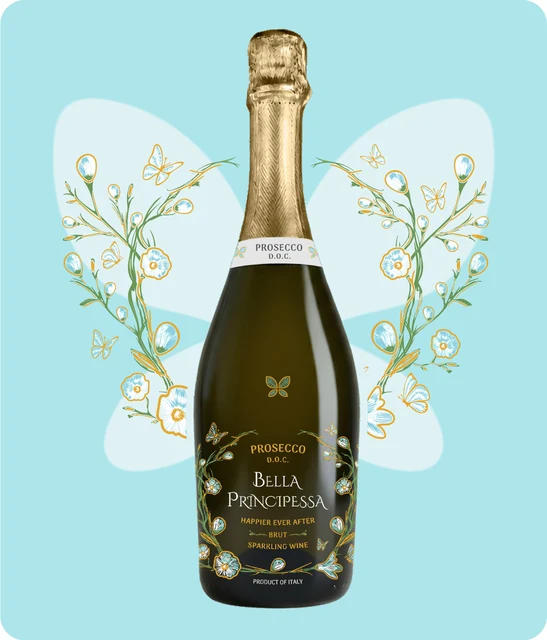
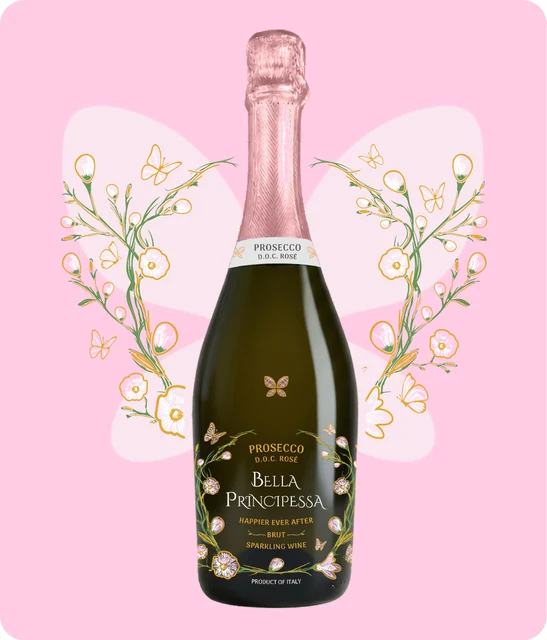
Bella Principessa white Brut and rosé Brut are Prosecco DOC. That designation places them within Prosecco's Italian production framework; it does not identify an individual vineyard's soil or weather.
Sources
WSET geography and wine style; Comité Champagne climate; Prosecco DOC territory and climate; Comité Champagne second fermentation; Prosecco DOC winemaking.