Champagne can show citrus, apple, pear and floral aromas, with brioche or toast developing through maturation. Its taste varies with the grapes, blend, age and sweetness. A young, fresh bottle and a mature Champagne need not taste alike, and the name alone does not tell you how sweet the wine will be.
A tasting note promises brioche. You notice citrus. Before you wonder whether everyone else has a more accomplished palate, remember that Champagne does not have one compulsory flavor.
Blend, age and sweetness can produce quite different experiences. Your job is to notice the wine in your glass, not find every word in somebody else’s description.
What can shape its character?
Grape varieties, blending and production all matter. Champagne’s second fermentation takes place in bottles, and maturation on the lees contributes to the finished style. Time and winemaking can therefore be relevant to the aromas and texture described by the producer.
Our Champagne definition gives the production context. It does not mean every bottle must show the same degree of bread-like character or the same fruit impressions.
Does Champagne taste sweet or dry?
Champagne comes in different sweetness styles. A fruity aroma does not establish a sweet finish: read the actual sweetness description, rather than assuming Champagne always tastes dry while Prosecco always tastes sweet.
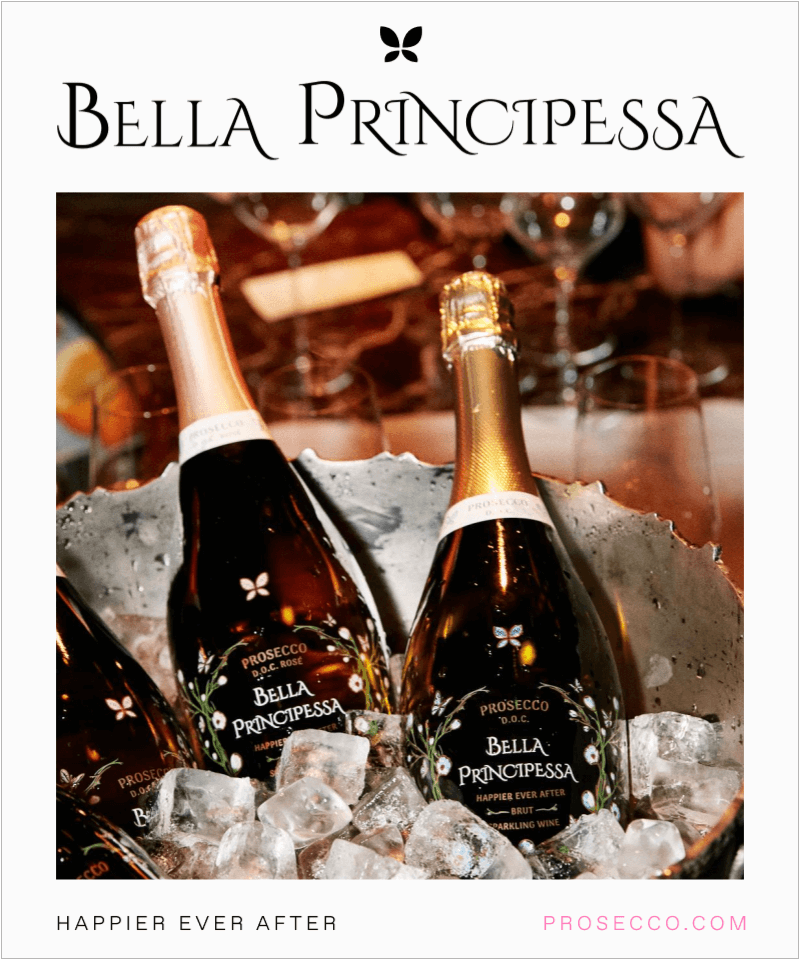
Our Prosecco and Champagne guide compares the two categories. Bella Principessa’s white Prosecco DOC and Prosecco DOC Rosé are both Brut. Their shared sweetness category does not establish identical sugar content or taste, or define every wine in either category.
How should you taste it?
Notice the aromas first, then the freshness, sweetness impression and texture. Taste a little with the food if you are planning a meal. You are choosing what you enjoy, not proving that you can repeat someone else’s tasting note.
For the table, read Champagne food pairings; for your own preference, see choosing Champagne or Prosecco.