What is Real Prosecco?

The short answer

Real Prosecco meets the origin, grape and production requirements of its stated appellation. It is not defined by a high price, elaborate packaging or one preferred style. Prosecco DOC is genuine Prosecco; DOCG names identify distinct appellations. Checking an individual bottle is a separate task from understanding the name.

Answered by Michael Goldstein · Founder, Bella Principessa
Updated on

The full answer

Real Prosecco meets the origin, grape and production requirements of its stated appellation. It is not defined by a high price, elaborate packaging or one preferred style. Prosecco DOC is genuine Prosecco; DOCG names identify distinct appellations. Checking an individual bottle is a separate task from understanding the name.

The bottle is beautiful. The description says authentic, traditional and premium. Lovely words, but none tells you quite as much as the wine’s actual designation.

Does real Prosecco have to be DOCG?

No. Prosecco DOC has its own defined growing area and production rules. Conegliano Valdobbiadene and Asolo DOCG have their own appellation requirements. These names help identify the wine; they do not make DOC a pretend version of DOCG.

Our Prosecco DOC and DOCG comparison explains the distinctions. For the broader introduction to grapes, origin and styles, read what Prosecco is.

Is traditional Prosecco more real than tank-fermented Prosecco?

Traditional can describe a production approach or an attachment to a particular style. It is not a substitute for checking the appellation. The Prosecco DOC rules include still, semi-sparkling, white sparkling and rosé sparkling wines. They specify tank fermentation for spumante and permit bottle or tank fermentation for frizzante.

Someone may prefer the character of a particular style. That preference does not establish that other compliant expressions are less genuine. Choose the style you enjoy without asking the bottle to win an argument about authenticity.

How do you check whether a particular bottle is authentic?

Use the relevant consortium’s current bottle-recognition guidance and compare the designation, producer and seller information. The Prosecco DOC consortium explains its state marking, identifying code and Italian-origin wording. A photograph, a high price or an unverified DOCG claim is not conclusive evidence on its own.

Our Prosecco bottle-authenticity guide covers practical checks and what to do if details conflict. Investigate an inconsistency before calling a bottle counterfeit.

What does this mean when choosing Bella Principessa?

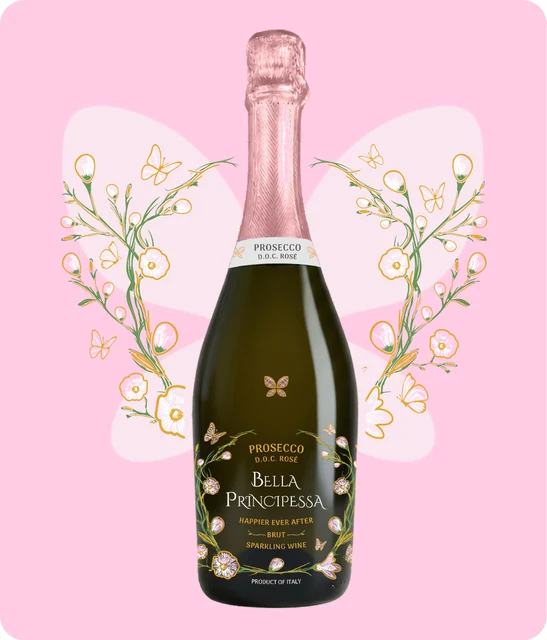
Bella Principessa’s white Prosecco DOC is Brut, while its Prosecco DOC Rosé is Brut. These are different expressions within the same Brut sweetness category, not different degrees of being real. Check the complete expression when buying, then choose for your taste and the occasion.

Recognize The Real Prosecco Brands: Try our Bella Principessa Prosecco Doc Rose

Sources

Prosecco DOC production rules and the official DOC bottle-recognition guide. Product expressions are linked to current Bella Principessa pages.
The long read, in the JournalWhat is Prosecco? Yes, it’s wine. Here’s the rest6 min read →

Keep this answer

Print it, save it, or send it to whoever asked.

More in this topic

What Prosecco is

ReadHow many types of Prosecco are there? →

What is Prosecco?

Prosecco is an Italian wine made mainly from Glera grapes, best known for its sparkling styles and fresh fruit character. Prosecco DOC comes from designated areas of Veneto and Friuli Venezia Giulia. It includes white and rosé sparkling wines, semi-sparkling white wine and still white wine.

Where it’s from, how it tastes and the rosé
Is Prosecco a place or a grape?

Prosecco has both a place-name connection and a history as grape terminology. In today's Italian appellation system, Glera is the principal grape and Prosecco identifies wines made under defined origin rules. If you expected one word to have one tidy job, wine history has other plans.

The village, the grape and the 2009 renaming
What are the different types of Prosecco?

Prosecco comes in three forms: spumante (fully sparkling), frizzante (semi-sparkling) and tranquillo (still). White Prosecco DOC can be made in all three; Prosecco DOC Rosé is fully sparkling. Sweetness terms such as Brut and Extra Dry describe a separate choice, with Extra Dry sweeter than Brut.

Bubbles, color, sweetness, DOC and DOCG
What is Prosecco DOC?

Prosecco DOC is a controlled designation of origin: Denominazione di Origine Controllata. It identifies wine meeting defined geographical, grape and production requirements in northeastern Italy. To choose a bottle, read the style too. White Brut and Extra Dry rosé can both be DOC while offering different experiences.

What DOC covers, and how DOCG differs
What does DOC mean on Prosecco?

DOC stands for Denominazione di Origine Controllata, Italian for "controlled designation of origin." On a bottle of Prosecco it means the grapes were grown in the official Prosecco area of northeast Italy, the wine is at least 85% Glera, it was made under the Prosecco DOC rules, and it passed checks before it was released.

What DOC guarantees, and what it doesn’t
What is the difference between Prosecco DOC and Prosecco DOCG?

Prosecco DOC is made across nine provinces of northeast Italy. Prosecco Superiore DOCG comes only from two hill zones inside that area, Conegliano Valdobbiadene and Asolo, under stricter rules such as lower grape yields. DOC bottles carry a light blue neck strip; DOCG bottles carry a gold one. Neither tells you how sweet the wine is.

DOC vs DOCG side by side, and checking a bottle
What is the Prosecco Superiore DOCG of Conegliano Valdobbiadene?

Conegliano Valdobbiadene Prosecco Superiore DOCG is the sparkling wine from a defined hillside appellation in Veneto, northeastern Italy. The production zone covers 15 communes. Superiore belongs to that wine's full designation; it is not a general adjective to attach to any Prosecco you happen to enjoy.

Where it comes from, and how to read the label
What is Prosecco DOCG of Valdobbiadene Superiore di Cartizze?

Valdobbiadene Superiore di Cartizze comes from a defined subzone within the Conegliano Valdobbiadene DOCG area. Its vineyards lie around San Pietro di Barbozza, Santo Stefano and Saccol. Cartizze is a place designation, not another name for all Prosecco or a sweetness category.

Where the subzone is, and how it relates to Rive
What is Still Prosecco?

Still Prosecco is the non-sparkling style, also called tranquillo. It has no fizz, unlike semi-sparkling frizzante or fully sparkling spumante. The absence of bubbles is intentional. You are looking at a different wine style, rather than a sparkling bottle that has lost its sparkle.

What makes it still, and how it differs from flat
What is Semi-Sparkling Prosecco like?

Semi-sparkling Prosecco is called frizzante. It has a gentler sparkle than spumante, the fully sparkling style. Frizzante describes the fizz, not the sweetness, so check the rest of the label before deciding whether the wine suits the meal you have in mind.

Frizzante vs spumante, sweetness and sparkle
Is All Prosecco The Same?

Prosecco varies by origin, sweetness, color and level of sparkle, as well as the producer’s choices. Remembering that you loved “the Italian one” is an excellent start to a story, but a difficult instruction for buying the same wine again.

Four details that set bottles apart
What are the key characteristics of Prosecco wine?

Prosecco’s key characteristics include fruit and floral aromas, freshness and, in sparkling styles, bubbles. Apple and pear are familiar aroma descriptions. Sweetness and texture vary by wine: a fruity aroma does not tell you its sugar level. Read the style and sweetness terms on the bottle as well.

Taste, rosé and the four traits to notice
What distinguishes Prosecco from other sparkling wines?

Prosecco is distinguished by a combination of Italian origin, Glera as its principal grape, and its regulated wine styles. Familiar Prosecco DOC spumante develops its bubbles through a second fermentation in tanks. Other sparkling wines can use that method too: neither the equipment nor the bubbles alone make a wine Prosecco.

Name versus method, and what to compare

All 113 Prosecco questions →

Share a moment.
One sip at a time.
Made in Italy.

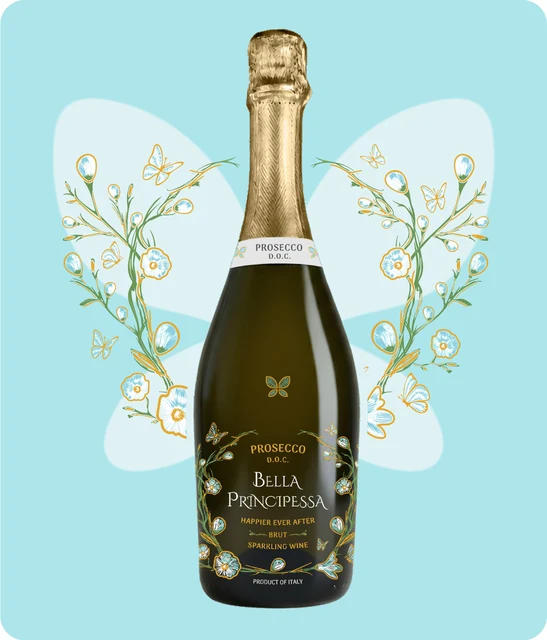
Bella Principessa Prosecco D.O.C. on a blue butterfly card Bella Principessa Prosecco D.O.C. Rosé on a pink butterfly card