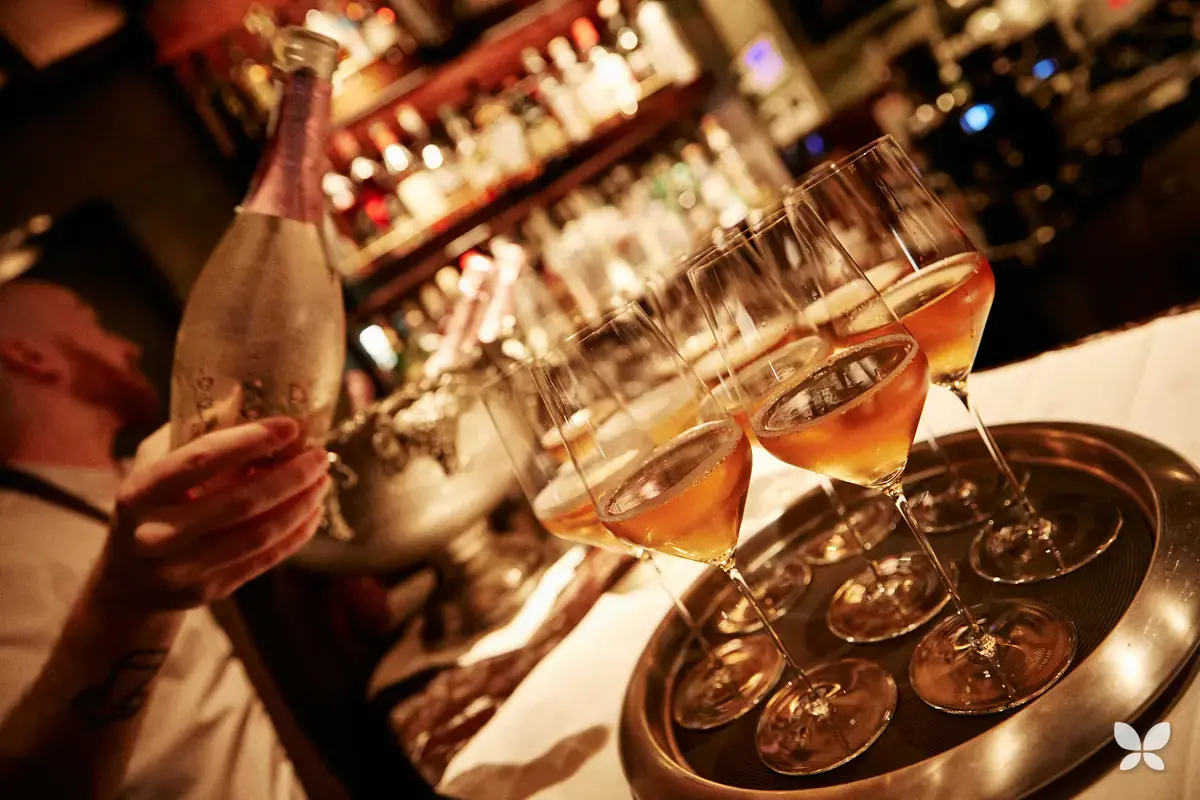
What is the French equivalent of Prosecco?

The short answer

France's answer to Prosecco is Champagne, or, closer in price and everyday use, crémant, made in eight French regions such as the Loire, Alsace and Burgundy. Neither is Prosecco: Prosecco is Italian by law. Champagne and crémant are fermented in the bottle and taste toasty; Prosecco is fermented in tanks and stays fresh and fruity.

Answered by Michael Goldstein · Founder, Bella Principessa

The full answer

In this answer 5 parts
  1. The short answer
  2. What do the French drink instead?
  3. Why doesn’t it taste like Prosecco?
  4. Is Prosecco French or Italian?
  5. Sources

In France, Champagne is what you serve. Crémant is what you drink.

Ask for “the French version of Prosecco” and you’re asking two things: what do I order in Paris, and is there a bottle that tastes like the one I like but sounds like the one that impresses people?

What do the French drink instead?

Champagne comes out when someone is watching: the wedding, the promotion, the first dinner with the in-laws. Crémant is for everything else, and nobody apologizes for it. It comes from eight regions, the Loire, Alsace and Burgundy among them, and it’s made the way Champagne is. It just can’t use the name.

Snobbery, it turns out, is mostly a question of who’s watching.

Why doesn’t it taste like Prosecco?

Crémant ferments a second time in each bottle and rests on the yeast (at least nine months for Crémant de Loire); that’s the brioche and toast. Prosecco gets its bubbles in tanks and is bottled young, so it tastes of the Glera grape: pear, green apple, white flowers.

Which is better, Champagne or Prosecco?

Is Prosecco French or Italian?

Italian. There is no French Prosecco: Prosecco is Italian by law, from the Veneto and Friuli Venezia Giulia, the way Champagne only comes from Champagne. Prosecco in French is still “Prosecco,” and Prosecco in France is sold as what it is, an Italian wine.

Is Prosecco a place or a grape?

So in a Paris café, order “un crémant” and nobody blinks. At home, if what you loved was the fruit in your Aperol Spritz, a French accent won’t improve it. Buy the Prosecco.

Sources

EU register: Prosecco PDO (eAmbrosia) · INAO: Crémant de Loire ·
Prosecco DOC consortium

The long read, in the JournalWhat is Prosecco? Yes, it’s wine. Here’s the rest6 min read →

Keep this answer

Print it, save it, or send it to whoever asked.

More in this topic

What Prosecco is

ReadHow many types of Prosecco are there? →

What is Prosecco?

Prosecco is an Italian wine made mainly from Glera grapes, best known for its sparkling styles and fresh fruit character. Prosecco DOC comes from designated areas of Veneto and Friuli Venezia Giulia. It includes white and rosé sparkling wines, semi-sparkling white wine and still white wine.

Where it’s from, how it tastes and the rosé
What does DOC mean on Prosecco?

DOC stands for Denominazione di Origine Controllata, Italian for "controlled designation of origin." On Prosecco it means the grapes grew in the official area of northeast Italy, at least 85% of them Glera, and the wine was made to the Prosecco DOC rules and checked before sale. It guarantees place and rules, not sweetness or a quality grade.

What DOC guarantees, and how to read the label
What is the difference between Prosecco DOC and Prosecco DOCG?

Prosecco DOC is made across nine provinces of northeast Italy. Prosecco Superiore DOCG comes only from two hill zones inside that area, Conegliano Valdobbiadene and Asolo, under stricter rules such as lower grape yields. DOC bottles carry a light blue neck strip; DOCG bottles carry a gold one. Neither tells you how sweet the wine is.

DOC vs DOCG side by side, and checking a bottle
What is the Prosecco Superiore DOCG of Conegliano Valdobbiadene?

Conegliano Valdobbiadene Prosecco Superiore DOCG is the sparkling wine from a defined hillside appellation in Veneto, northeastern Italy. The production zone covers 15 communes. Superiore belongs to that wine's full designation; it is not a general adjective to attach to any Prosecco you happen to enjoy.

Where it comes from, and how to read the label
What is Prosecco DOCG of Valdobbiadene Superiore di Cartizze?

Valdobbiadene Superiore di Cartizze comes from a defined subzone within the Conegliano Valdobbiadene DOCG area. Its vineyards lie around San Pietro di Barbozza, Santo Stefano and Saccol. Cartizze is a place designation, not another name for all Prosecco or a sweetness category.

Where the subzone is, and how it relates to Rive
What is Still Prosecco?

Still Prosecco is the non-sparkling style, also called tranquillo. It has no fizz, unlike semi-sparkling frizzante or fully sparkling spumante. The absence of bubbles is intentional. You are looking at a different wine style, rather than a sparkling bottle that has lost its sparkle.

What makes it still, and how it differs from flat
What is Semi-Sparkling Prosecco like?

Semi-sparkling Prosecco is called frizzante. It has a gentler sparkle than spumante, the fully sparkling style. Frizzante describes the fizz, not the sweetness, so check the rest of the label before deciding whether the wine suits the meal you have in mind.

Frizzante vs spumante, sweetness and sparkle
What is Real Prosecco?

Real Prosecco meets the origin, grape and production requirements of its stated appellation. It is not defined by a high price, elaborate packaging or one preferred style. Prosecco DOC is genuine Prosecco; DOCG names identify distinct appellations. Checking an individual bottle is a separate task from understanding the name.

DOCG, the tank method and checking a bottle
Is All Prosecco The Same?

Prosecco varies by origin, sweetness, color and level of sparkle, as well as the producer’s choices. Remembering that you loved “the Italian one” is an excellent start to a story, but a difficult instruction for buying the same wine again.

Four details that set bottles apart
What are the key characteristics of Prosecco wine?

Prosecco’s key characteristics include fruit and floral aromas, freshness and, in sparkling styles, bubbles. Apple and pear are familiar aroma descriptions. Sweetness and texture vary by wine: a fruity aroma does not tell you its sugar level. Read the style and sweetness terms on the bottle as well.

Taste, rosé and the four traits to notice
What distinguishes Prosecco from other sparkling wines?

Prosecco is distinguished by a combination of Italian origin, Glera as its principal grape, and its regulated wine styles. Familiar Prosecco DOC spumante develops its bubbles through a second fermentation in tanks. Other sparkling wines can use that method too: neither the equipment nor the bubbles alone make a wine Prosecco.

Name versus method, and what to compare

All 106 Prosecco questions →

Share a moment.
One sip at a time.
Made in Italy.

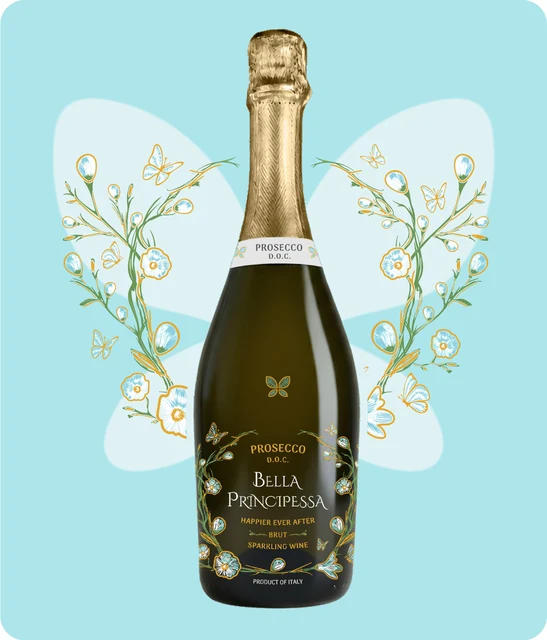
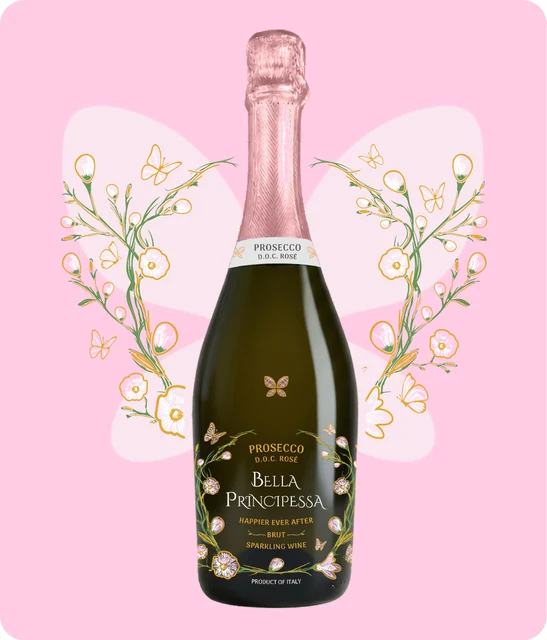
Bella Principessa Prosecco DOC on a blue butterfly card Bella Principessa Prosecco DOC Rosé on a pink butterfly card