Where is Prosecco from? A place, not a grape. Here’s the map
Prosecco is a village, a region and, until 2009, a grape. The village is the one almost nobody has seen. Here are all three, on one map.

Michael GoldsteinFounder, Bella PrincipessaUpdated on · 6 min read
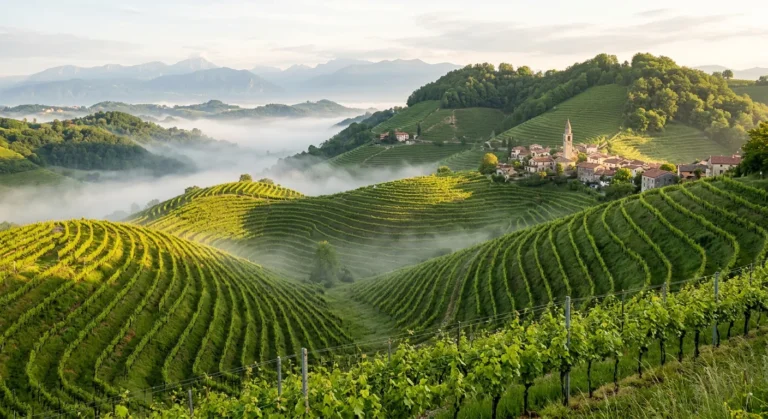
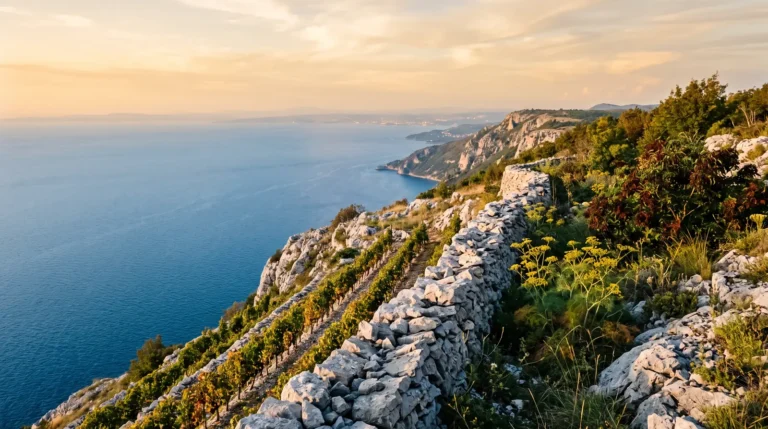
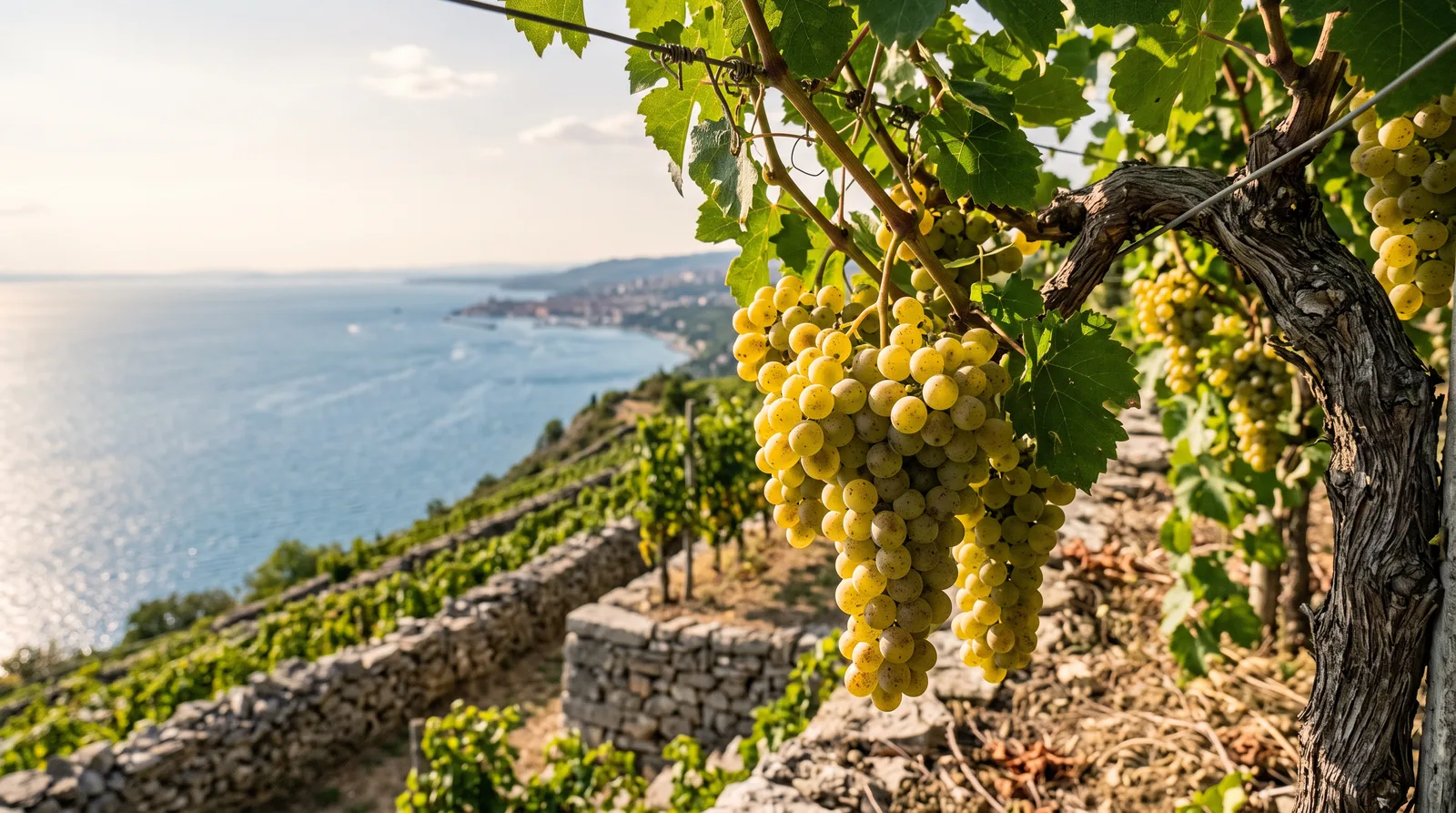
Cover illustration, for illustration purposes: Glera grapes on the karst above the Gulf of Trieste, where the village of Prosecco stands.
At a glance
- Where from
- Northeast Italy: nine provinces in the Veneto and Friuli Venezia Giulia
- A place?
- Yes. A village near Trieste gave the wine its name, and the name is protected
- A grape?
- Not any more. Since 2009 the grape is called Glera
- The famous hills
- Between Conegliano and Valdobbiadene, north of Treviso, far from the village
- Only Italian?
- In the EU, yes: wine from anywhere else can’t be called Prosecco
In this story 7 parts
Where is Prosecco from?
Prosecco comes from northeast Italy: nine provinces across two regions, the Veneto and Friuli Venezia Giulia, between the Alps and the Adriatic.1 The name comes from a small village called Prosecco on the coast just north of Trieste.2 The famous steep vineyards are more than 100 km to the west, in the hills between Conegliano and Valdobbiadene.
So Prosecco is a village, a region and, until 2009, a grape. The village is the one almost nobody has seen. Here are all three, on one map.
- The nine provinces of Prosecco DOC Treviso, Venezia, Vicenza, Padova and Belluno in the Veneto; Pordenone, Udine, Gorizia and Trieste in Friuli Venezia Giulia
- The hills Conegliano Valdobbiadene, and Asolo to the west: the two Superiore DOCG zones
- ★Prosecco, the village On the coast just north of Trieste. It gave the wine its name
Is Prosecco a place?
Yes, twice over. It is a small village on the karst above the sea, inside the city limits of Trieste.23 And it is a protected wine area: under EU law, only wine from the official Prosecco zone, made under its rules, may be called Prosecco.1
The village is at the eastern edge of that zone, and it is not where most Prosecco grows. That surprises everyone, including, it’s fair to say, quite a few people who sell it.
Is Prosecco a grape?
Not any more. For centuries the grape and the wine shared the name. In 2009 the grape was officially renamed Glera, to protect the wine’s place of origin, so that Prosecco would mean the place-protected wine and nothing else.4
It was a clever move. A grape can be planted anywhere; a place can’t be moved. Prosecco wine today must be at least 85% Glera.5
A grape can be planted anywhere. A place can’t be moved.
Why is it called Prosecco?
Because of the village, and the village has been famous for wine for a very long time. Pliny the Elder wrote of the wine of Pucinum, grown on a rocky height by a bay of the Adriatic, and said the empress Livia credited her 82 years to it and drank no other.6 Scholars place Pucinum, tentatively, at today’s Prosecco.7 Whether the wine kept her young or she simply liked it, history doesn’t say.
The wine travelled west over the centuries, into the hills of the Veneto and Friuli, where it grew up.1 The name stayed with the village, and the village stayed small.
Does Prosecco have to come from Italy?
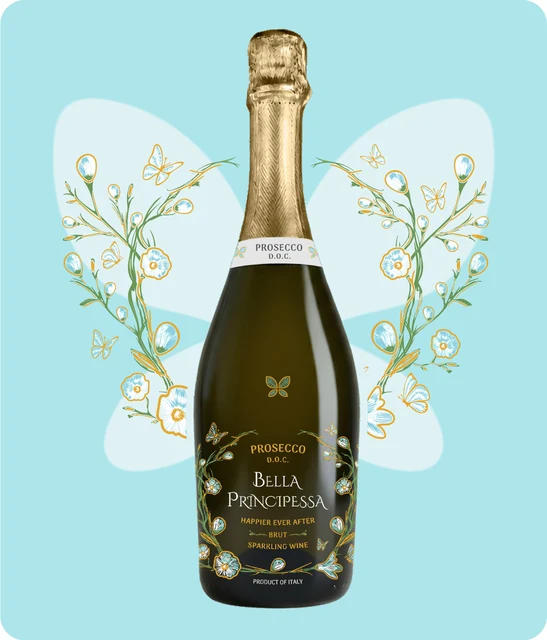
In the EU, yes. Prosecco is a protected designation of origin, so a sparkling wine made anywhere else can’t use the name.1 Outside Europe it depends on each country’s own rules. The simple test on any bottle: look for Prosecco DOC or DOCG on the label. What DOC means.
On the karst above Trieste: a field guide
The plateau above Trieste has its own wine life, older than the Prosecco boom and quite unbothered by it.
- The osmiza regulars. Farm families here open their doors for short spells to sell their own wine, cheese and cured meats. The name comes from the Slovene for eight, once the number of days a year they could sell. The sign is a leafy branch and a red arrow.8 The regulars know to follow the branch.
- The walkers. Up from the city on a Sunday for the view over the gulf, and for the lunch the view has earned.
- The wine pilgrim. Came to see where Prosecco began and expected the postcard hills. Finds the sea instead. Is not disappointed.
- You, now. The only person at the next dinner party who knows where the village is.
Where is Prosecco made today?
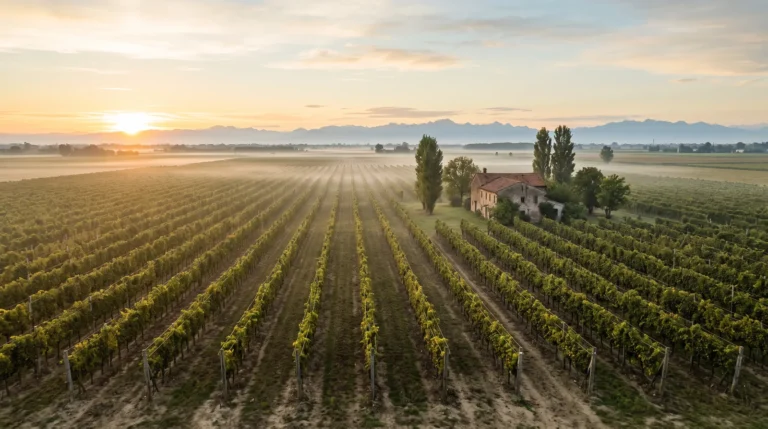
All over the nine provinces, mostly on the plains of the Veneto and Friuli,1 and on the steep hills of Conegliano Valdobbiadene and Asolo, where the wine is labelled Prosecco Superiore DOCG.5 If you want to see the vineyards everyone photographs, go to the hills. Our guide to the Prosecco hills, an hour from Venice has the train, the wine road and the lunch.
FAQs
Where is Prosecco from?
Northeast Italy: nine provinces in the Veneto and Friuli Venezia Giulia. The name comes from the village of Prosecco, near Trieste.
Is Prosecco a place or a grape?
A place. It is a village near Trieste and a protected wine area. The grape was renamed Glera in 2009.
What grape is Prosecco made from?
Glera, at least 85%. Until 2009 the grape was also called Prosecco.
Is all Prosecco from Italy?
Yes, under EU rules: only wine from the official area of northeast Italy may be called Prosecco in the EU.
Where is the village of Prosecco?
On the coast just north of Trieste, in Friuli Venezia Giulia, at the eastern edge of the wine area.
Where are the famous Prosecco hills?
Between Conegliano and Valdobbiadene in the province of Treviso, about an hour north of Venice.
Sources: dig deeper
The facts in this story come from these pages. Each number in the text links to its source.
- Official Journal of the European Union (EUR-Lex), ‘Prosecco’: approved amendment to the product specification, with the single document (C/2025/6773), 23 December 2025
- PromoTurismoFVG, Friuli Venezia Giulia tourism board, Prosecco
- Regione Autonoma Friuli Venezia Giulia, Una nuova DOC interregionale per il Prosecco (AgriFor webletter 15)
- Wine Spectator, Is ‘Prosecco’ a grape or a region?, 9 August 2017
- Decanter, Prosecco: the ultimate buyer’s guide, 12 October 2026
- Perseus Digital Library, Tufts University, Pliny the Elder, Natural History, Book XIV, chapter 8 (trans. Bostock and Riley)
- Pleiades: A Gazetteer of Past Places, Castellum Pucinum
- PromoTurismoFVG, Friuli Venezia Giulia tourism board, Le osmize: i sapori forti e tradizionali del Carso, 11 March 2021
Checked on November 2, 2026.
Keep this story
Print the map for the next wine quiz. Or send it to whoever said Prosecco was a grape.

 Il Bar di StaseraSophie’s 40th