Everyone Loves Prosecco. So Why Can’t They Remember Its Name?
Two old friends, several bottles of Bella Principessa, and a rather interesting theory about how people buy wine.

Michael GoldsteinFounder, Bella PrincipessaUpdated on · 11 min read
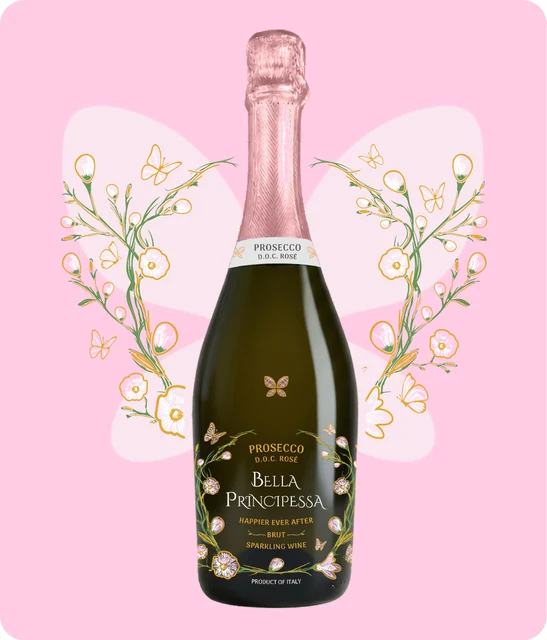
Cover illustration, for illustration purposes.
At a glance
- Who
- James Hunt, former newspaper journalist, asks. Michael Goldstein, creative director of Bella Principessa, answers.
- The wines
- Bella Principessa Gold and Rosé
- Part 1
- America, La Marca and Mionetto, the men, the butterflies and a very demanding creative director
In this story 8 parts
- So, how’s America treating Bella Principessa?
- Why Prosecco?
- But people know La Marca and Mionetto. They’re hardly unknown.
- You seem to spend an extraordinary amount of time thinking about what women want.
- What about the men?
- Ah, yes. The butterflies.
- You didn’t just wake up one morning and decide to decorate a wine bottle. Where did this all come from?
- Which explains why you’re such a demanding creative director.
Earlier this year, Bella Principessa entered the Miami market, beginning the rather complicated business of becoming a Prosecco American consumers might one day ask for by name.
Now, catching up in London after some time apart, creative director Michael Goldstein has brought his longtime friend James Hunt a few bottles. Gold, Rosé, and several more for good measure.
He’s also rather keen to show James the newly rebuilt Prosecco.com, a project involving an unreasonable number of hours and some very strong opinions about the positioning of individual pixels.
James has spent much of his professional life asking questions people don’t always enjoy answering. A former newspaper journalist with a background in auditing, he’s direct, dryly funny and particularly good at finding the contradiction in somebody else’s argument.
He’s also been a friend and occasional mentor to Michael for years. Michael values his advice enormously.
James wants to know how Miami is going, why Bella Principessa needs butterflies, and what makes a supposedly sensible businessman spend his spare time photographing supermarket shelves.
So, how’s America treating Bella Principessa?
Michael Well, she’s certainly making us work for her.
James Not quite the overnight success, then?
Michael You of all people should know there’s no such thing.
James I’ve been telling you that for years.
Michael You have. Seriously, you’ve been a tremendous influence on me. You’ve taught me to question things, look beyond the obvious and not simply accept what somebody tells me.
But Miami’s been fascinating.
Getting a bottle onto a shelf and getting somebody to walk into a shop and ask for it by name are two completely different businesses.
James And you’re trying to do both?
Michael Apparently. Nobody warned me about the second one.
Why Prosecco? It’s hardly a new invention.
Michael That’s precisely what attracted me.
Imagine launching some obscure mushroom-based energy elixir that’s supposed to replace Red Bull.
First you’ve got to explain what the bloody thing is. Then convince people they need it. Then persuade them to stop drinking whatever they’re already drinking.
You’re practically asking people to change their lives.
James And you’re not?
Michael Not at all. I just want them to change their Prosecco.
People already know Prosecco. They order it in restaurants, buy it in supermarkets, share it with friends.
“Not at all. I just want them to change their Prosecco.”
The demand already exists.
What interests me is why somebody who already wants Prosecco chooses one bottle over another.
But people know La Marca and Mionetto. They’re hardly unknown.
Michael Absolutely. And they’ve done a tremendous job.
La Marca and Mionetto have invested years in building their brands in America. You have to respect what they’ve achieved.
But we’ve spoken informally with hundreds of women about Prosecco, and something interesting keeps happening.
Ask whether they enjoy it and they’re enthusiastic.
Then ask them to name their favourite brand.
You can almost see the wheels turning.
“Oh, I know the one. It’s got that label. I’ve seen it everywhere. I’d recognise it if you showed me.”
And they’re genuinely trying.
But quite often they can’t remember the name.
James So they recognise it, but can’t necessarily remember what it’s called?
Michael Exactly.
It’s like recognising somebody at a dinner party.
You remember their face. You might remember what you talked about.
But their name has completely escaped you.
It’s awkward socially.
In branding, it can be expensive.
James But that’s hardly scientific research.
“It’s awkward socially. In branding, it can be expensive.”
Michael Of course not. These are informal conversations, not a representative survey.
But they raise an interesting question.
There’s a difference between recognising a bottle, remembering its name, preferring it and specifically asking for it.
Those aren’t necessarily the same thing.
And that’s the opportunity we’re interested in.






You seem to spend an extraordinary amount of time thinking about what women want.
Michael Well, first of all, they’re our principal audience.
And second, I grew up surrounded by women.
My sister, my cousins, practically all my first cousins were girls. I was the only boy at the table.
James And after all that, you’ve figured them out?
Michael Not even remotely. But I’ve had considerably more practice than most.
Sometimes I feel like Mel Gibson in What Women Want.
Except nobody gave me the ability to read minds. I’ve just had a lifetime of unsolicited advice.
James And you’ve turned that into a wine business.
Michael When you put it like that, it does sound rather ridiculous.
But I often say Prosecco is to women what beer is to men.
James That’s going to get you into trouble.
Michael Probably. But it’s an observation, not a rule about what everybody drinks.
Two blokes finish work and go for a beer. They meet their mates, talk about their day, have a laugh.
Nobody assumes they’re celebrating anything.
Women meet their friends after work, share a glass of Prosecco and catch up.
The drink can serve much the same social purpose.
It’s about the company.
We tend to associate sparkling wine with weddings, anniversaries and special occasions.
But Prosecco can be part of everyday social life.
Sometimes getting through Tuesday is reason enough.
James You’ve clearly had some difficult Tuesdays.
Michael You have no idea.
What about the men? Are we allowed to drink it?
Michael Of course.
A lot of men encounter it socially. A wedding, a party, dinner with their partner.
And then there’s one of my favourite shopping scenarios.
A man gets a phone call.
“Darling, while you’re at the shops, can you pick up a bottle of Prosecco?”
James Ah. A mission.
Michael Exactly.
Now he’s standing in front of twenty bottles.
He knows what he needs. He doesn’t necessarily know which one.
Perhaps he recognises a label. Perhaps something catches his eye. Perhaps he remembers a bottle somebody brought to dinner.
James So your business plan is to rescue confused husbands in supermarkets?
Michael It’s certainly one market segment.
But the broader point is that people don’t always buy things after conducting a thorough investigation.
Sometimes they’ve got fifteen seconds and a shopping list.
And that’s where packaging matters.
Ah, yes. The butterflies.
Michael And flowers. Don’t forget the flowers.
James My apologies. The entire botanical collection.
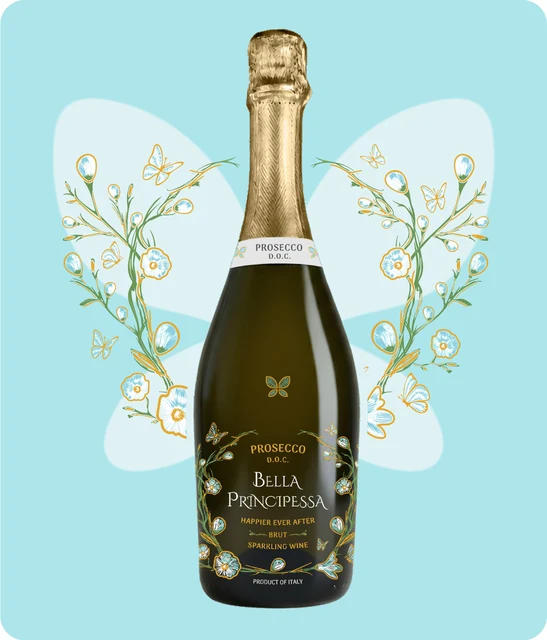
Michael Look at a wine shelf. Dozens of bottles competing for attention.
I wanted Bella Principessa to be instantly recognisable.
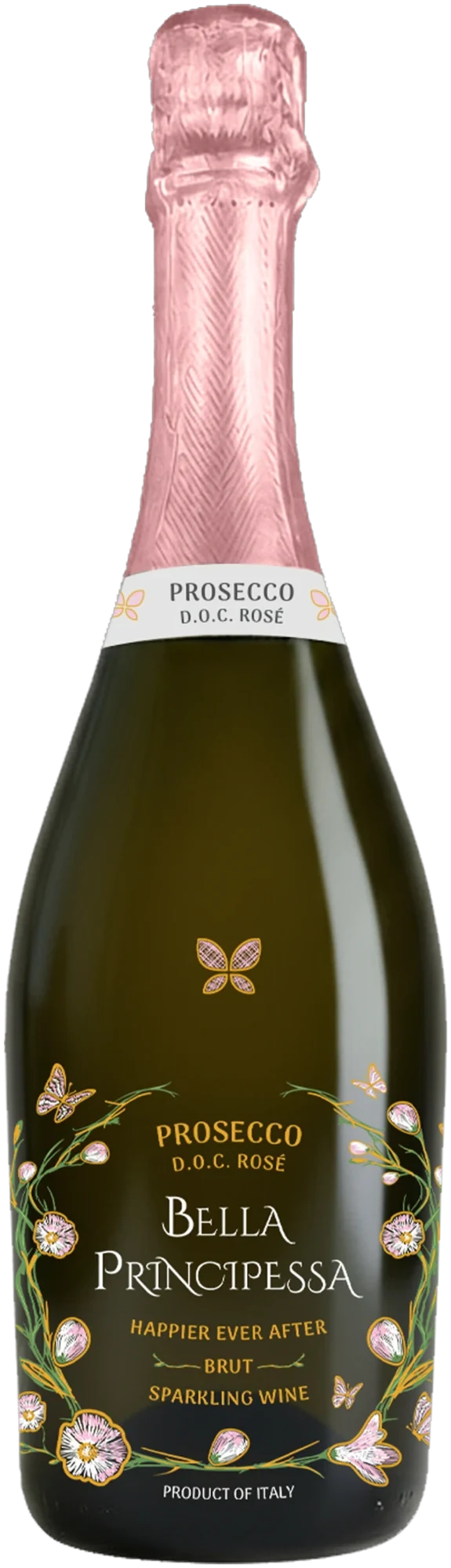
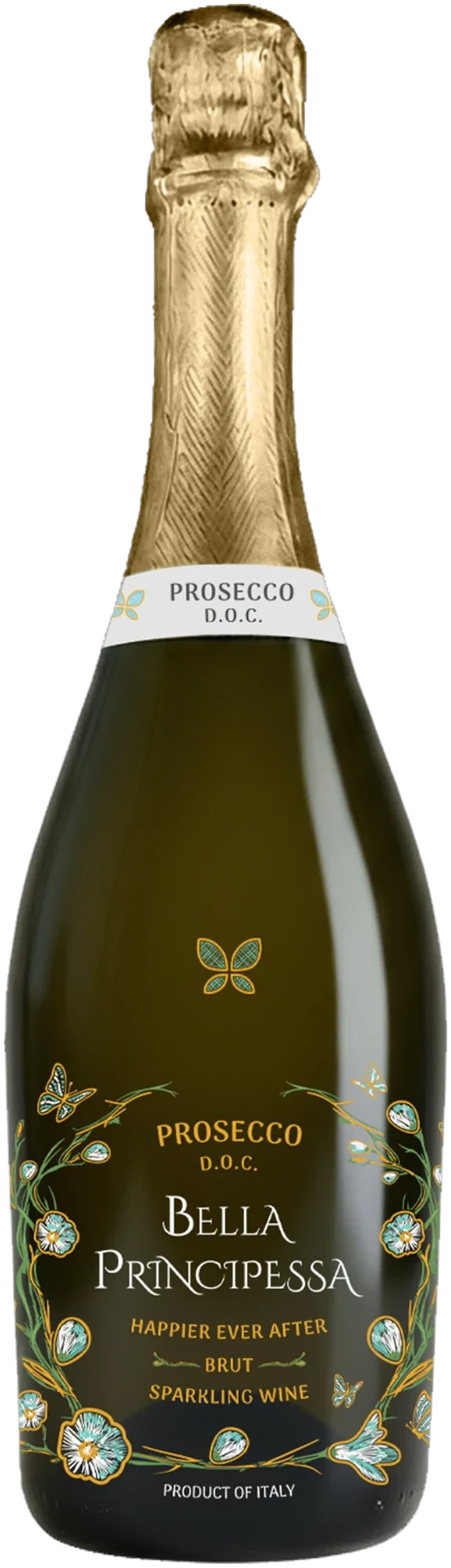
That’s why the bottle itself is ceramic-painted, with flowers and butterflies becoming part of the design.
And something lovely happens when you put it into people’s hands.
They turn it around. Look at the details. Show it to somebody else.
Some of the women we’ve interviewed practically coo over it like somebody’s handed them a baby.
James That’s a rather expensive baby.
Michael Considerably less demanding, though.
James So you’re telling me the bottle makes the wine taste better?
Michael Not necessarily. But presentation influences what people expect, and that can influence how they experience it.
The bottle creates the expectation. The wine has to live up to it.
Otherwise you’ve just made a very expensive vase.
“The bottle creates the expectation. The wine has to live up to it.”
James Which, knowing you, would probably be a rather attractive vase.
Michael (Laughs.) I’d hope so.
But there’s another part of this.
When somebody takes a bottle to a dinner party, it’s not simply about what’s inside.
It’s a gesture.
You want to bring something thoughtful, something your host will be pleased to receive.
You shouldn’t have to spend sixty dollars to make someone feel you’ve brought them something special.
A beautiful bottle can make an affordable gift feel considered.
Something you’re happy to put on the table, or give to a friend.
It’s part of the experience before anybody’s poured a glass.
James Assuming they drink it.
Michael Well, that does rather help the business model.
You didn’t just wake up one morning and decide to decorate a wine bottle. Where did this all come from?
Michael I think it started when I was a kid.
My grandfather Leonard, my dad Ralph, my uncle Michael. They all had the same habits.
Some of my earliest memories are going around shops with them. I must have been five, six, maybe seven.
They’d be looking at the shelves, how things were displayed, the packaging, what caught their attention.
And they’d ask what I noticed.
At that age, you don’t realise you’re learning anything.
James Your family was in retail, wasn’t it?
Michael Very much so.
My grandfather Leonard and his brother Ralph came from a large family involved in grocery retailing.
My father, also called Ralph, and his cousins Ronnie and Peter worked in the family shops.
Ronnie and Peter went on to found Superdrug, with their brother Howard also involved. My dad and his brother Michael worked there too.1
I can’t claim any credit for what they built.
What I remember is going around shops with my family.
James So you inherited the family business?
Michael No. I inherited a way of looking at things.
And I didn’t even realise it until years later.
“No. I inherited a way of looking at things.”
James And you’re still doing it?
Michael Constantly.
I actually enjoy going to the supermarket.
A colour catches my eye, a typeface, a clever bit of packaging. I’ll stop and photograph it.
I’ve collected references for years. Packaging, billboards, book covers, magazine layouts.
James Most people just buy the biscuits.
Michael I know. Sometimes I forget to.
But the lovely thing is that my dad and my uncle still have exactly the same habits.
I speak to my dad several times a day. We’re always talking about something. Business, design, an idea, something one of us has seen.
I’m incredibly fortunate to still have those conversations.
And he’s been enormously supportive of Bella Principessa. His backing has meant a great deal. Other people have supported the business and helped us establish it in America too.
It’s taken a lot of people.
James So your family taught you everything?
Michael I wouldn’t go that far.
But they taught me to pay attention.
And my dad’s still perfectly happy to tell me when he thinks I’ve got something wrong.
Which explains why you’re such a demanding creative director.
Michael I’ve driven a few designers mad.
I’ve spent years in creative direction.
I’m obsessive about typography, kerning, colour, spacing, movement. I can spot a pixel out of place from ten feet away.
James And yet you couldn’t get the Bella Principessa website looking right.
Michael Exactly. And it’s driven me mad.
Everything physical we produced for Bella Principessa, the bottle, cartons, printed materials, I was proud of.
But online, for a long time, we couldn’t quite capture that same feeling.
I knew what I wanted, but I didn’t always have the technical skills to produce it myself.
So I relied on specialists. There are brilliant ones, of course.
But getting something functional and getting it to feel exceptional are different things.
It’s like building a house.
Getting the walls up is one job. Getting the proportions, lighting and finishes right is another.
That’s where so much of the time and expense goes.
So I’ve been learning more of those skills myself.
James Which explains the eighteen-hour days.
Michael Unfortunately.
James And the website?
Michael Finally beginning to feel like the bottle.
James So you’ve caught up with the packaging.
Michael That’s a particularly unpleasant way of putting it.
But yes.
James Even if nobody notices the two pixels?
Michael Especially if nobody notices them.
Sources and further reading
The facts in this story come from these pages. Each number in the text links to its source.
- British Beauty Council, Superdrug’s history
- The Dining Traveler, Enore Ceola on Prosecco
- Consorzio Tutela Prosecco DOC, 2025 production and export figures
- UIV-Vinitaly Observatory, U.S. Prosecco consumers
- Shanken News Daily, La Marca U.S. performance
- Gallo, La Marca and its cooperative heritage
- Shanken News Daily, Mionetto U.S. performance
Checked on November 5, 2026.
For adults of legal drinking age. Enjoy responsibly.
Keep this story
Print it, save it, or send it to the friend who’s hosting.
 Il Bar di StaseraSophie’s 40th