The short answer
Prosecco Rosé, also called pink Prosecco, is Glera blended with 10 to 15% Pinot Nero (Pinot Noir) made as a red wine, which gives the color. Unlike white Prosecco, it is always fully sparkling, always vintage-dated, and spends at least 60 days in the tank. It is never sweeter than Extra Dry.
 Answered by Michael Goldstein · Founder, Bella Principessa
Updated on
The full answer
In this answer 11 parts
- The short answer
- Prosecco vs Prosecco Rosé at a glance
- Is Prosecco Rosé the same as pink Prosecco?
- What gives Prosecco Rosé its color?
- Is Prosecco Rosé always sparkling?
- When did Prosecco Rosé become official?
- What does Millesimato mean on Prosecco Rosé?
- Is Prosecco Rosé sweeter than Prosecco?
- What does Prosecco Rosé taste like?
- Prosecco vs rosé wine
- Which should you pour?
Prosecco vs Prosecco Rosé at a glance
| Prosecco | Prosecco Rosé | |
|---|---|---|
| Grapes | At least 85% Glera, the rest from a short list of permitted grapes | 85 to 90% Glera + 10 to 15% Pinot Nero (Pinot Noir) made as a red wine [1] |
| Color | Straw yellow | Pale pink, more or less intense [1] |
| Styles | Sparkling (spumante), lightly sparkling (frizzante) or still | Sparkling only [1] |
| Sweetness | Brut Nature to Demi-Sec (sparkling) | Brut Nature to Extra Dry [1][2] |
| Sugar at the sweet end | Demi-Sec: 32 to 50 g/L | Extra Dry: 12 to 17 g/L [2] |
| Time in the tank (second fermentation) | No minimum set in the Prosecco DOC rules | At least 60 days [1] |
| Vintage year | Optional | Required: “Millesimato” and the harvest year [1] |
| Official Prosecco DOC style since | 2009 | 2020 [3][4] |
| Taste | Green apple, pear, white flowers | The same, plus strawberry, raspberry and red flowers [1] |
The pink bottle is the one with more rules. White Prosecco can be still, lightly sparkling or fully sparkling, vintage-dated or not, bone dry or Demi-Sec. The Rosé has to be fully sparkling, carry a harvest year, spend at least 60 days in the tank and stop at Extra Dry. If one of the two is the relaxed one, it is the white.
Is Prosecco Rosé the same as pink Prosecco?
Yes. “Pink Prosecco” is the everyday name for Prosecco Rosé. Look for the words Prosecco, Rosé and DOC on the label: a pink sparkling wine without the word Prosecco is something else, and may be lovely, but it isn’t this.
What gives Prosecco Rosé its color?
Pinot Nero, which is the Italian name for Pinot Noir. A Prosecco Rosé is 85 to 90% Glera, the same grape as white Prosecco, plus 10 to 15% Pinot Nero made as a red wine, so the juice spends time on its dark skins before it joins the blend. Those are the limits the rules allow, not the recipe of every bottle. How it works: how Prosecco Rosé is made and Pinot Noir and Prosecco.
The color and the bubbles come from different steps. The Pinot Nero brings the pink. The tank brings the fizz, which is why Rosé is not simply white Prosecco in a different outfit.
Is Prosecco Rosé always sparkling?
Yes. Prosecco DOC Rosé exists only as spumante, the fully sparkling style, and its second fermentation takes place in a sealed pressure tank (the Martinotti or Charmat method) for at least 60 days. There is no still or lightly sparkling pink Prosecco.
When did Prosecco Rosé become official?
In 2020. Italy’s national wine committee approved it in May 2020 [4], and the European Union published the change in its Official Journal on October 28, 2020 [3]. A Rosé can go on sale from the first of January after its harvest [1], so the first bottles could reach shelves on January 1, 2021. White Prosecco has had its DOC since 2009; the pink one is the newcomer, and it is still earning its reputation.
What does Millesimato mean on Prosecco Rosé?
It means vintage-dated. The label of every Prosecco Rosé must say Millesimato and show the harvest year, and at least 85% of the grapes come from that year [1]. That makes the year on the bottle a freshness check: this is a wine meant for drinking young, so the newest vintage on the shelf is usually the freshest one.
Is Prosecco Rosé sweeter than Prosecco?
No, and this is the question the color gets wrong. Rosé stops at Extra Dry (12 to 17 grams of sugar per liter), while white Prosecco goes on to Dry and Demi-Sec. Both come in Brut, which is under 12 g/L, so a Brut Rosé and a Brut white sit in the same range. Extra Dry is sweeter than Brut, whatever the pink suggests.
Order a bottle of pink Prosecco and watch the table sort itself out. The skeptic says “Isn’t that the sweet one?”, takes a sip of the Brut and asks for the bottle.
The full breakdown is in
What does Prosecco Rosé taste like?
Like Prosecco with a few red berries in the room. The rules describe the same apple, pear and white flowers as the white, with strawberry, raspberry and red flowers added for the Rosé [1]. Expect a pale pink, fine bubbles and a foam that lasts. Fresh rather than heavy. A deeper pink is just a deeper pink, not a better wine.
Prosecco vs rosé wine
Many people searching “rosé vs Prosecco” mean ordinary rosé wine, and the gap there is wider. Rosé wine is a color: made in many countries from many grapes, usually still, and anywhere from bone dry to sweet blush. Prosecco is a place, a grape and a method: sparkling wine from nine provinces in northeast Italy, made mostly from Glera in a tank. Prosecco Rosé is the bridge, pink like the first and made by the rules of the second. How it stacks up against other pink fizz: Prosecco Rosé and other sparkling rosés.
Which should you pour?
Pour white Prosecco for classic mimosas, spritzes and Bellinis. Pour the Rosé when you want a little more body with food (salmon, shrimp, prosciutto and melon, strawberries) or when the table needs to look like a party before anyone has said a word. More ideas: Prosecco Rosé food pairings.
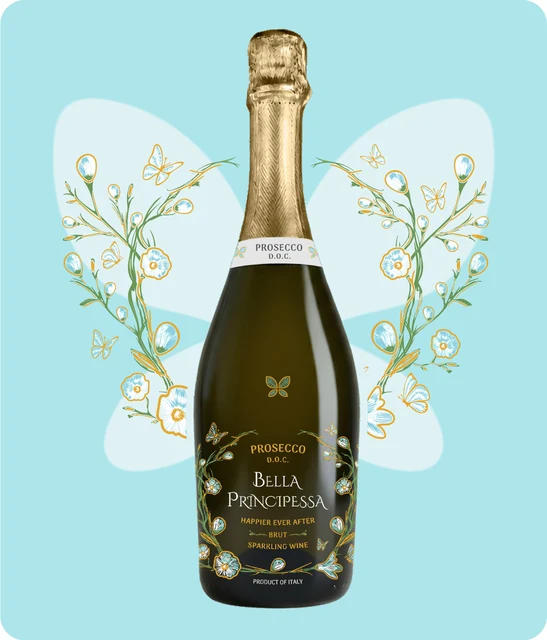
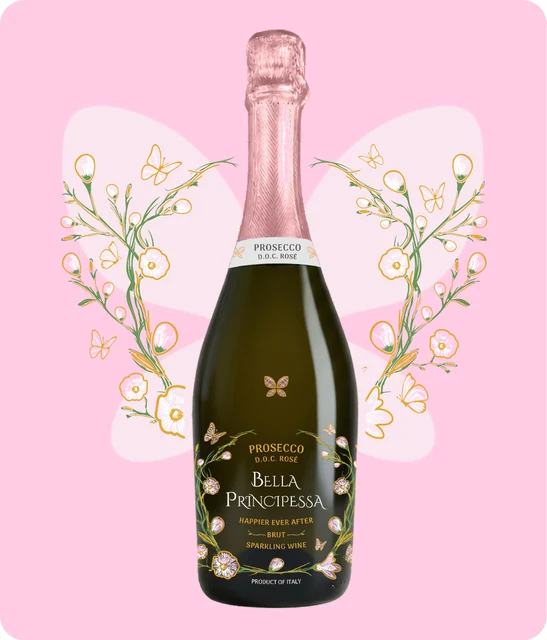
Bella Principessa Prosecco DOC and Bella Principessa Prosecco DOC Rosé are both Brut, so you’re choosing a flavor, not a sweetness.
Source[1] Prosecco DOC consortium: production regulation (disciplinare); [2] Prosecco DOC consortium: types and sweetness levels; [3] European Commission, Official Journal C 362, October 28, 2020; [4] ANSA, May 21, 2020: ministry approval of the Prosecco Rosé rules.
Keep this answer
Print it, save it, or send it to whoever asked.

 Il Bar di StaseraSophie’s 40th