The Charmat method: how Prosecco gets its bubbles
An Italian invented it. A Frenchman got the billing. Here is how a steel tank turns a still white wine into Prosecco, step by step, and why that is the whole point.

Michael GoldsteinFounder, Bella PrincipessaUpdated on · 6 min read
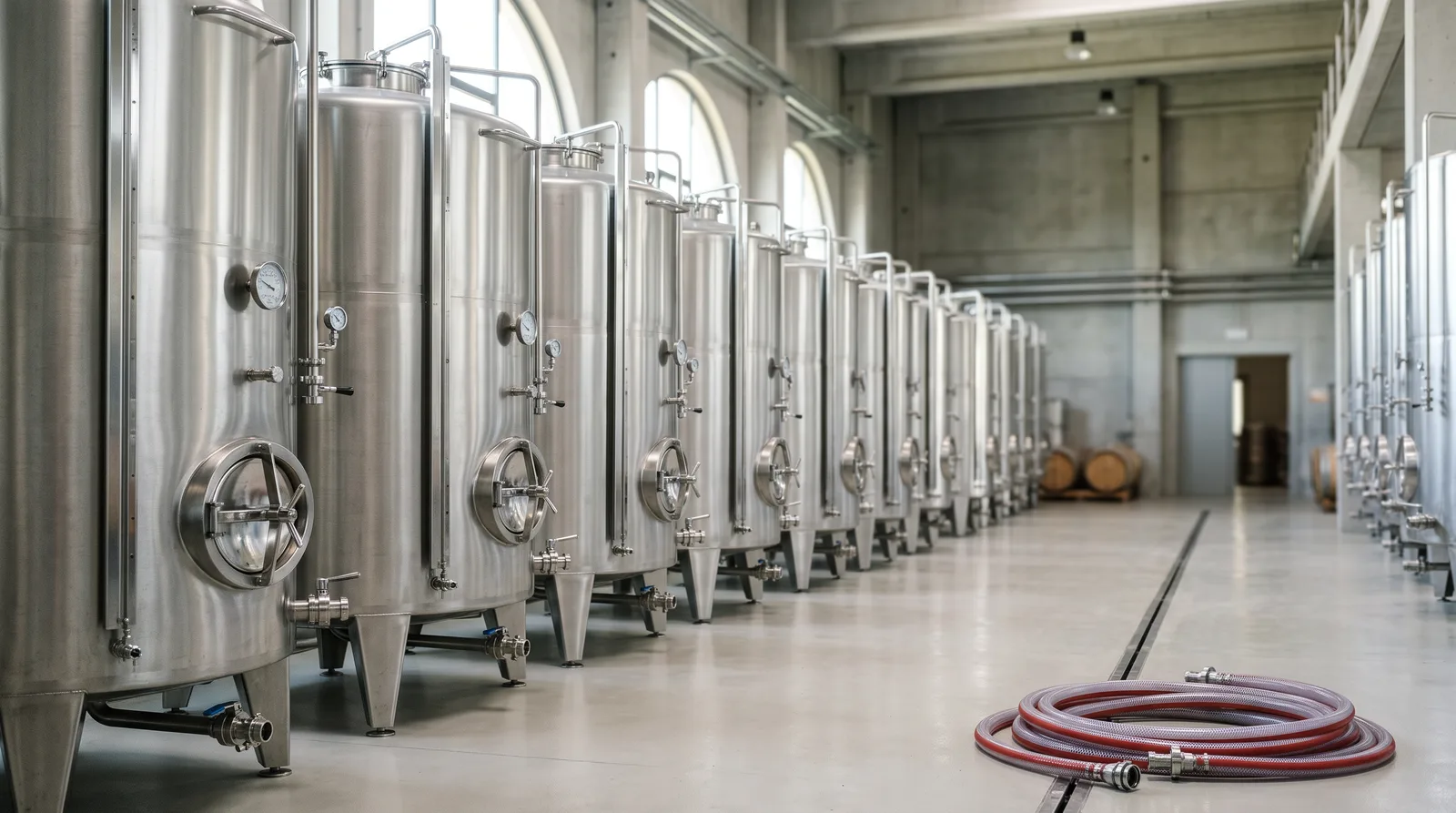
Cover illustration, for illustration purposes: the kind of steel pressure tank where Prosecco gets its bubbles.
At a glance
- What it is
- Sparkling wine made by a second fermentation in a large sealed steel tank, not in each bottle
- Also called
- Martinotti method (in Italy), tank method, cuve close, Martinotti-Charmat
- Invented by
- Federico Martinotti in Italy, patented 1895; improved and patented by Eugène Charmat in France in 1907
- Used for
- Almost all Prosecco. It keeps the grape’s fresh fruit and flowers in the glass
- Vs Champagne
- Champagne ferments a second time in every bottle and ages for months on the yeast
In this story 7 parts
What is the Charmat method?
The Charmat method makes a wine sparkle by fermenting it a second time inside a large, sealed steel tank. The yeast eats a measured dose of sugar and makes carbon dioxide. The tank won’t let the gas out, so it dissolves into the wine, and the wine is bottled under pressure with its bubbles still in it. It is how almost all Prosecco is made.
That’s the whole trick. Everything else is engineering, and a long argument about whose name goes on it.
Champagne is a wine about patience. Prosecco is a wine about timing: catch a delicate, aromatic grape at its freshest and get it into the bottle before anything can dull it. The tank is how you do that.
How does the Charmat method work? Step by step
- Make a still wineGlera grapes are pressed and fermented into a dry, still white wine, the base wine.
- Fill the tankThe base wine goes into a pressure-resistant steel tank, an autoclave, with sugar and selected yeast.
- Seal it and waitThe second fermentation makes a little more alcohol and carbon dioxide. With nowhere to go, the gas dissolves into the wine and the pressure rises. A fully sparkling wine must reach at least 3 bar.1
- Give it timeThe wine rests in the tank. The rules for Prosecco DOC Rosé require at least 60 days of it.2 Some producers leave every wine longer for a softer, creamier feel.
- Chill, filter, finishThe wine is cooled, the spent yeast is filtered out, and the final sweetness is set, from bone-dry Brut Nature to soft Demi-Sec.2
- Bottle under pressureThe wine goes into bottles on a pressurised line, so the bubbles stay in the wine and out of the air.
Weeks, not years. That is the first thing to understand about Prosecco, and the second thing to understand about its price.
Charmat vs the traditional (Champagne) method
- Second fermentation
- One big sealed tank
- Time on the yeast
- Short: weeks to months
- What it tastes of
- The grape: green apple, pear, white flowers
- Best known for
- Prosecco
- Second fermentation
- Inside every single bottle
- Time on the yeast
- Long: at least 12 months for Champagne
- What it tastes of
- The yeast: toast, brioche, pastry3
- Best known for
- Champagne, Cava, Franciacorta
In the traditional method, the one Champagne uses, the second fermentation happens in each bottle, and the wine then lies on its spent yeast. Non-vintage Champagne must spend at least 15 months in the cellar, 12 of them on the yeast.4 That long, slow contact is where the toast and brioche come from.3
Neither method is “better”. They answer different questions. If your grape’s best quality is a long conversation with yeast, you ferment in the bottle. If its best quality is the smell of green apple and white flowers, you protect that, and the tank does it better. Glera, the Prosecco grape, makes a light, aromatic base wine.2 Two years on the yeast would bury exactly what makes it charming.
Champagne is a wine about patience. Prosecco is a wine about timing.
Who invented the Charmat method?
An Italian, first. Federico Martinotti, a Piedmontese wine scientist who later directed the royal wine station in Asti, patented a way of making sparkling wine in large closed tanks in 1895.5 In 1907 a French technician, Eugène Charmat, patented an improved, workable version of the equipment,5 and it was his name that travelled.
So Italians say metodo Martinotti, most of the world says Charmat, and careful labels say Martinotti-Charmat. As with plenty of good ideas, the Italian came up with it and the Frenchman got the billing. You will also see it called the tank method, or cuve close, “closed tank”.
Is the Charmat method cheaper? Is it worse?
Cheaper, yes, mostly because it is faster. One tank holds thousands of bottles’ worth of wine and is ready in weeks. The traditional method ferments, ages, turns and opens every bottle one at a time, over months or years. Time in a cellar is money.
Worse, no. Cheaper to make is not the same as cheap. A tank can’t rescue tired grapes, and it can’t hide a careless base wine; if anything, a fresh style shows every flaw. What goes in still decides what comes out. Our guide to why Prosecco costs less has the rest of the sums.
Is all Prosecco made with the Charmat method?
Nearly all. In the Conegliano Valdobbiadene hills some producers still make an older style that is refermented in the bottle and left on its yeast, so it is a little cloudy. It is labelled sui lieviti, “on the lees”, also called col fondo, “with the bottom”.6 It is lovely.
The tank can also stop at different levels of fizz. Spumante, fully sparkling, has at least 3 bar of pressure; frizzante, lightly sparkling, between 1 and 2.5 bar.1 If the label just says Prosecco, assume the tank, and see the types of Prosecco for the rest.
How to taste the difference
- Pour a young Prosecco Brut, very cold, into a white wine glass rather than a narrow flute, so the aromas have room.
- Smell before you sip: green apple, pear, white flowers. That is the grape, kept fresh by the tank.
- Notice what is missing: no toast, no brioche, no pastry. Those come from long months on the yeast.
- Drink it young. Prosecco is made to be enjoyed fresh, not kept for a special occasion that never comes.
FAQs
What is the Charmat method?
A way of making sparkling wine in which the second fermentation happens in a large sealed steel tank, not in each bottle. The tank traps the carbon dioxide, and the wine is bottled under pressure.
Is the Charmat method the same as the Martinotti method?
Yes. Federico Martinotti patented the idea in Italy in 1895; Eugène Charmat patented an improved version in France in 1907. Tank method and cuve close mean the same thing.
Is Prosecco made like Champagne?
No. Prosecco’s second fermentation happens in a tank; Champagne’s happens in each bottle, followed by at least 15 months in the cellar for non-vintage wine.
How long does the Charmat method take?
Weeks to a few months in the tank, rather than the months or years of the traditional method. Prosecco DOC Rosé must spend at least 60 days in the tank.
Does the Charmat method make sweeter wine?
No. Sweetness is set separately, at the end. A tank-method Prosecco can be bone-dry Brut Nature or softer Extra Dry.
Is all Prosecco made with the Charmat method?
Almost all. A few hill producers make a cloudy, bottle-fermented style labelled sui lieviti, often called col fondo.
Sources: dig deeper
The facts in this story come from these pages. Each number in the text links to its source.
- EUR-Lex, Regulation (EU) No 1308/2013, Annex VII, Part II: categories of grapevine products (sparkling and semi-sparkling wine), 17 December 2013
- Italian Ministry of Agriculture (MASAF), Prosecco DOC: consolidated production rules (disciplinare), decree of 22 September 2025
- WSET, Wine & Spirit Education Trust, A guide to sparkling wine: production methods and regional styles, 19 January 2026
- French Ministry of Agriculture (BO agri), Cahier des charges de l’appellation d’origine contrôlée «Champagne», homologué par l’arrêté du 31 juillet 2025, 7 August 2025
- Gambero Rosso International, Everything you need to know about the Italian Method, 4 March 2021
- Conegliano Valdobbiadene DOCG Consortium, Types of wine
Checked on November 2, 2026.
Keep this story
Print it for the wine class, or send it to whoever said Prosecco is “just cheap Champagne”.

 Il Bar di StaseraSophie’s 40th