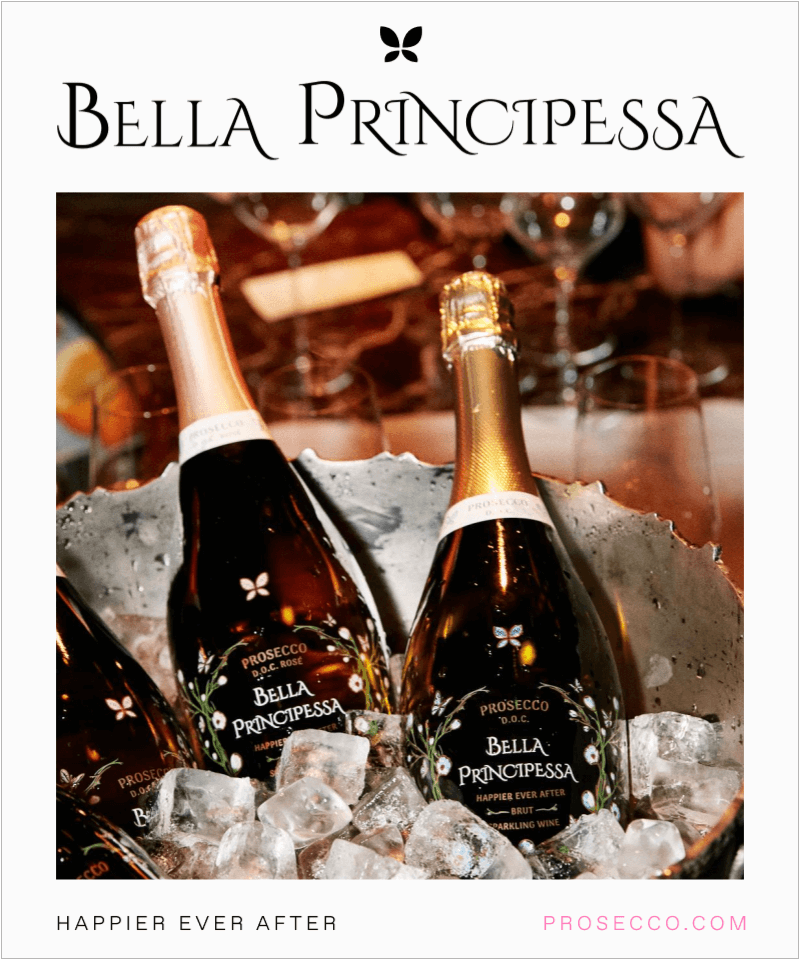
A Prosecco label gives you several different facts: appellation, producer, bottle volume, alcohol content and style information such as Brut or Extra Dry. Read them together. DOC identifies defined origin and production requirements; it does not tell you that every bottle will suit your taste.
The front of the bottle caught your eye. Now you turn it around and find percentages, initials and several lines of small print. There is useful information here, even if the label was not written with your evening's reading pleasure in mind.
Give each detail one job: where the wine comes from, what style it is, how much is in the bottle and whom to ask about it.
Prosecco label meaning: origin and designation
Prosecco DOC identifies a defined appellation with grape, origin and production requirements. DOCG designations such as Conegliano Valdobbiadene and Asolo have their own rules. Our Prosecco DOC and DOCG guide explains those distinctions.
For Prosecco DOC, the consortium points readers to the designation, Italian-origin wording and official bottle-identification features. If something looks inconsistent, compare it with the producer's current information rather than relying on the decoration.
Read style separately
Brut and Extra Dry describe sweetness categories. Spumante and frizzante describe different levels of sparkle. Neither replaces the other.
Bella Principessa's white Prosecco DOC is Brut; its DOC Rosé is Brut. Those are useful distinctions when deciding what you want to pour. The Prosecco sweetness and Prosecco styles guides explain the terms.
Check the practical details
Read the stated bottle volume and ABV. A large-looking bottle does not establish its capacity, and a sweetness term does not tell you its alcohol percentage. Producer or bottler details also help when you need to ask about a specific wine. Our Prosecco consortium guide distinguishes the organizations behind the appellations.
An appellation does not automatically substantiate separate claims about health, sustainability or suitability for a particular diet. Those need their own evidence.
For concerns about the bottle itself, see checking a Prosecco bottle. This guide explains the label's meaning; it is not a complete labeling-compliance checklist for producers or importers.
Sources
Prosecco DOC production regulations; consortium bottle-recognition guide.