White Prosecco DOC may include up to 15% permitted varieties alongside Glera, including Chardonnay, Pinot Grigio and several local grapes. Rosé follows a different rule: Glera with Pinot Nero vinified as red wine. The permitted list describes possibilities, not the recipe of every bottle.
You expect to see Glera in a description of Prosecco. Chardonnay or Pinot Grigio may be more of a surprise. Familiar names have appeared in a place you did not expect them.
They can belong there. White Prosecco DOC allows a supporting blend, provided Glera remains the main grape and the production rules are met.
The permitted white-wine varieties
The regulations allow these grapes, individually or combined, up to 15%:
- Verdiso
- Bianchetta Trevigiana
- Perera
- Glera Lunga
- Chardonnay
- Pinot Bianco
- Pinot Grigio
- Pinot Nero vinified as white wine
A producer may also use Glera alone. There is no requirement to invite every permitted variety into the bottle.
How can a red grape appear in white wine?
Pinot Nero, also called Pinot Noir, can be vinified as white wine for an allowed white Prosecco DOC blend. The grape’s color does not by itself dictate the finished wine’s color. The winemaking matters.
For Prosecco DOC Rosé, the required combination is different: 85–90% Glera and 10–15% Pinot Nero vinified as red wine. Do not transfer the whole white-wine list to the rosé.
What does your bottle contain?
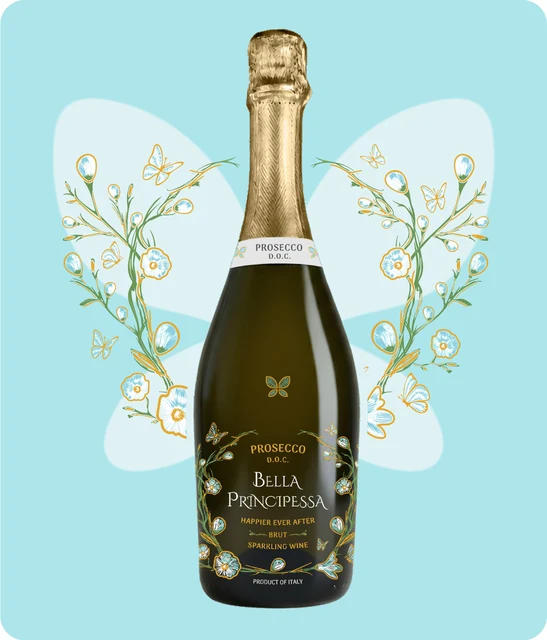
For exact proportions, consult current producer information. Bella Principessa white Brut and rosé Brut sit within their respective DOC categories. Their individual blends should be checked against product information rather than reconstructed from the permitted list.
Our guides to the main Prosecco grape, Pinot Noir and Prosecco and Prosecco rosé put the details together. You can recognize the supporting grapes without needing to recite the list over dinner.
Source
Prosecco DOC production regulations, Article 2.