Conegliano Valdobbiadene Prosecco Superiore DOCG is the sparkling wine from a defined hillside appellation in Veneto, northeastern Italy. The production zone covers 15 communes. Superiore belongs to that wine's full designation; it is not a general adjective to attach to any Prosecco you happen to enjoy.
There is quite a lot of Italy to get through before you reach the end of the name. Take it a piece at a time and it becomes less intimidating.
Conegliano Valdobbiadene tells you the origin, Prosecco Superiore identifies the sparkling expression, and DOCG connects the wine to the appellation's requirements.
Where does it come from?
The consortium describes a production area of 15 communes in the hills between Conegliano and Valdobbiadene. This is a more specific origin than the broader nine-province Prosecco DOC area.
What else might appear on the label?
Additional designations can make the origin more specific. Rive refers to defined local areas, while Superiore di Cartizze identifies a particular subzone. They deserve their own explanations rather than being used as interchangeable badges of prestige.
See Superiore di Cartizze for that subzone and Prosecco DOC and DOCG for the wider DOC/DOCG comparison.
Is every version equally sweet?
No. Read the sweetness term on the bottle. A recognized origin does not tell you whether you prefer the wine's style with the food you are serving.
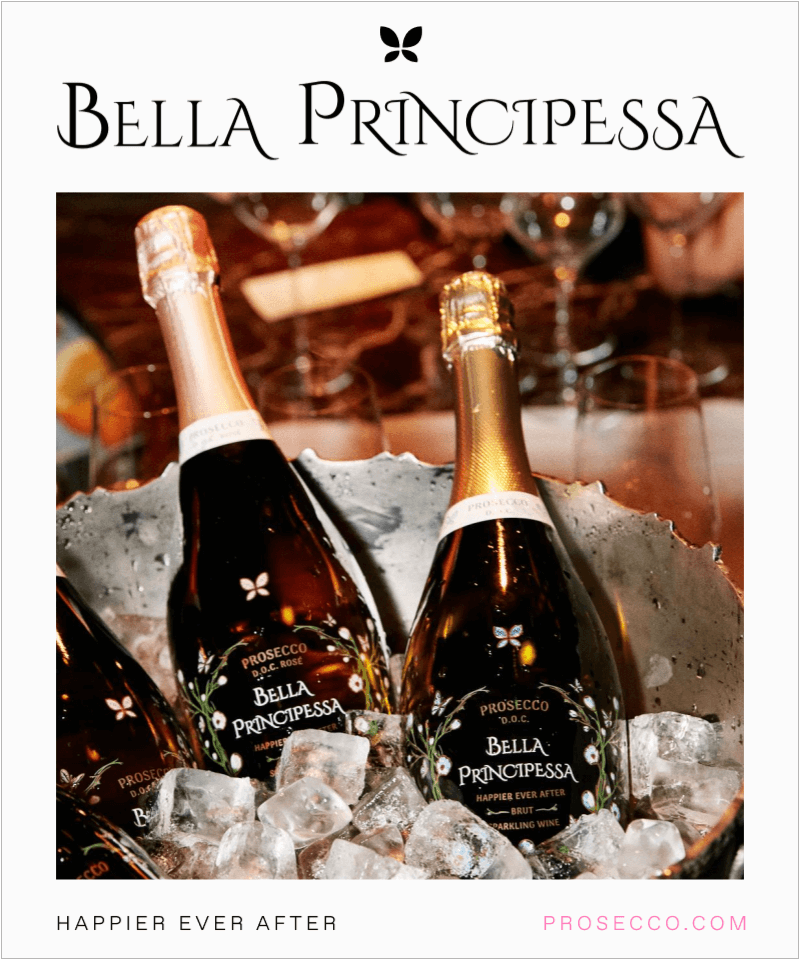
Bella Principessa white Brut and rosé Brut are Prosecco DOC. Their labels give you their own origin designation and sweetness terms, which are more useful for choosing than borrowing a description from another appellation.
For the vocabulary beyond origin, read Prosecco styles. Our where Prosecco is made guide puts the areas on the broader Prosecco map.