Glera is the main grape used in Prosecco. White Prosecco DOC requires at least 85% Glera, with other permitted grapes making up no more than 15% combined. Prosecco DOC Rosé has a different recipe: 85–90% Glera and 10–15% Pinot Nero, vinified as red wine.
The list of permitted grapes is rather longer than the guest list in any one bottle. A variety being allowed does not mean a producer uses it.
Which grapes are used for Prosecco?
| Prosecco DOC type | Main grape | Other grapes |
|---|---|---|
| White, including sparkling, semi-sparkling and still | At least 85% Glera | Up to 15% combined of the permitted varieties; a wine can also be 100% Glera |
| Rosé sparkling | 85–90% Glera | 10–15% Pinot Nero, vinified as red wine |
For white Prosecco DOC, the permitted supporting varieties are Verdiso, Bianchetta Trevigiana, Perera, Glera Lunga, Chardonnay, Pinot Bianco, Pinot Grigio and Pinot Nero vinified as white wine. The 15% allowance applies to their combined share, not to each variety separately.
Pinot Nero is also called Pinot Noir. Its role depends on how it is made into wine: white vinification is permitted in white Prosecco DOC, while red vinification supplies the required red-wine component in DOC Rosé. Read more about Pinot Noir’s two roles.
Is Prosecco made from grapes?
Yes. Prosecco is wine made from fermented grape juice, with Glera at its heart. The grape name and the wine name answer different questions. For the historical naming distinction, see whether Prosecco is a place or a grape.
Does every bottle use the same blend?
No. White Prosecco DOC may be entirely Glera or include permitted supporting varieties. DOC Rosé must include the specified Pinot Nero component. A bottle’s precise blend needs its producer’s current technical information; the appellation rules tell you what is allowed.
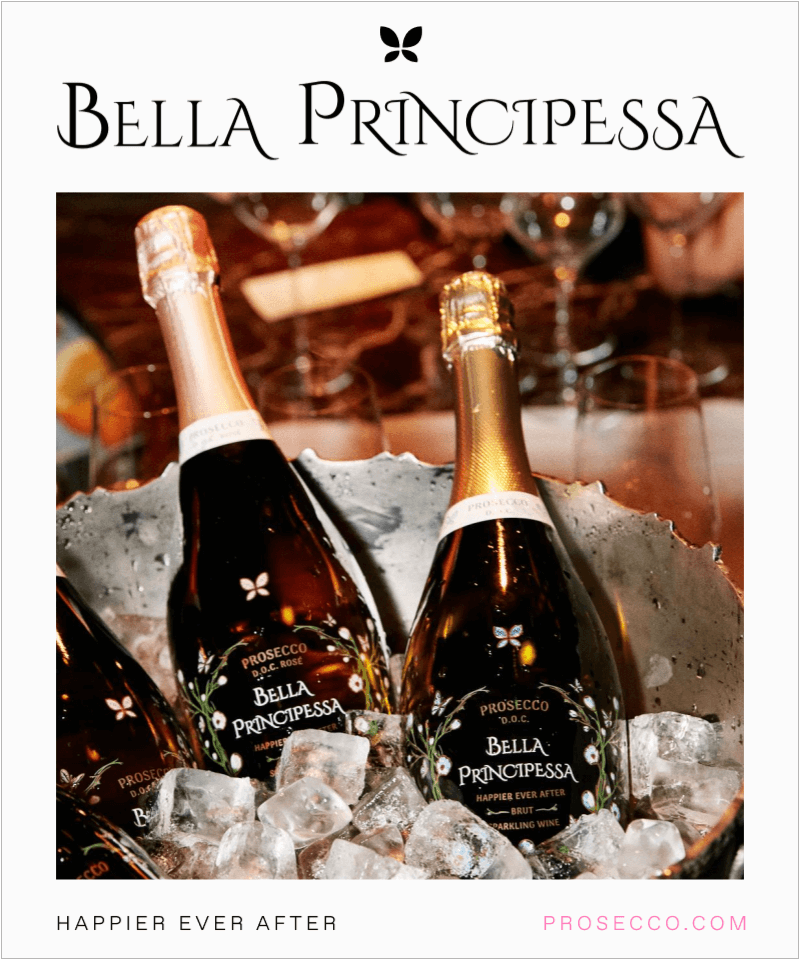
Bella Principessa’s white DOC Brut and DOC Rosé Brut are different expressions of the category. Their sweetness terms do not disclose their exact grape percentages. Check the individual wine’s information before assuming a recipe.
What does Glera contribute?
Knowing the grape is a useful start; understanding the wine takes you further. Explore Glera’s sensory contribution and how Prosecco is made. For the appellations themselves, our DOC and DOCG comparison explains the distinction.
Source
Prosecco DOC production regulations, Article 2. The blend table above describes DOC rules; it is not a substitute for the separate DOCG specifications or a particular producer’s technical sheet.