Prosecco typically tastes fresh and fruity, with apple, pear and floral notes. Sparkling styles add lively bubbles, while sweetness varies by bottle. A fruity aroma does not necessarily mean a sweet wine: check terms such as Brut or Extra Dry on the label.
“I’m getting pear,” someone says.
You’re getting slightly tired of being asked what you’re getting.
Wine vocabulary can turn a lovely drink into a small public examination. Prosecco generally offers apple, pear and floral notes, but you don’t have to identify an orchard before deciding whether you want another sip.
Those descriptions should help you recognise what you enjoy. They are vocabulary you can borrow, rather than an entrance requirement.
Does fruity mean sweet?
A wine can smell of ripe fruit and still taste dry. Your friend calling it fruity and you calling it dry may both be right, which is a more agreeable outcome than most dinner-table disputes.
Apple, pear and floral notes describe what the wine reminds you of. They do not mean someone has added those ingredients, and they do not establish how much sugar remains in the wine.
For sweetness, look at terms such as Brut and Extra Dry. Extra Dry is sweeter than Brut, despite the confidence with which its name suggests otherwise.
Our answer to whether Prosecco is dry or sweet explains the distinction.
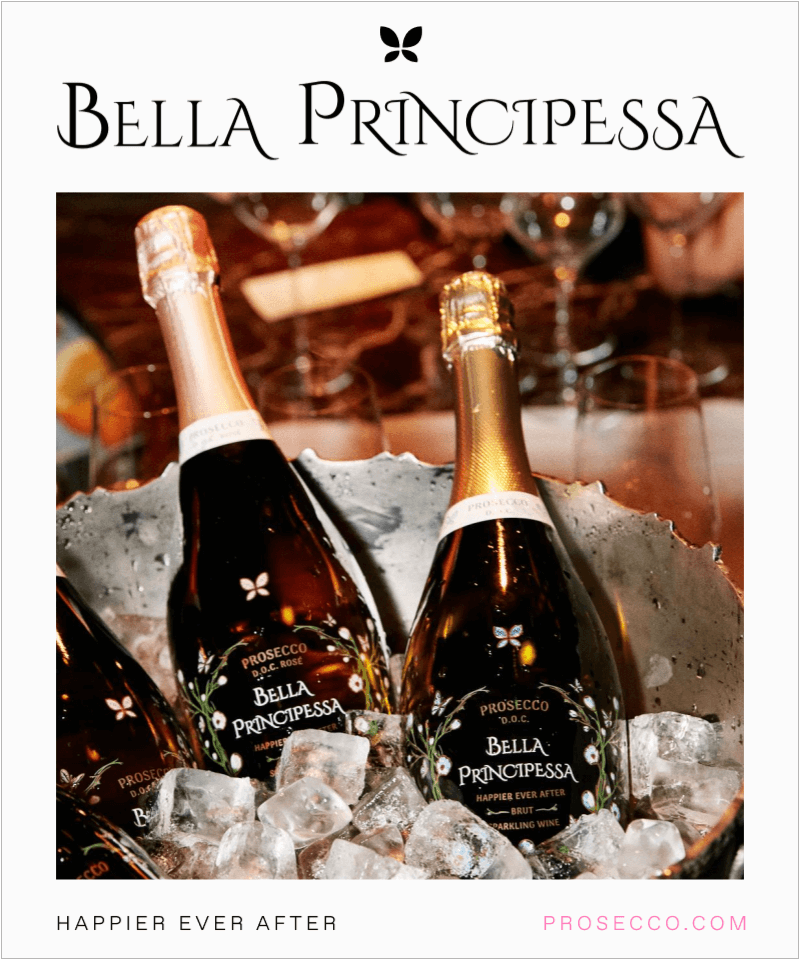
Bella Principessa’s white and rosé are both Brut. Pink is a colour, not a sugar declaration. It has enough expectations placed on it already.
What do the bubbles change?
Bubbles contribute texture. Spumante is fully sparkling, frizzante has a gentler sparkle and tranquillo is still.
When you take a sip, notice the freshness, the sweetness impression and how the bubbles feel. You may prefer one combination to another without needing a more elaborate explanation than “I like this”.
Our Prosecco characteristics guide separates those tasting dimensions. It can help you describe a preference clearly enough to find it again, which is rather more useful than winning an argument about a pear.
What does Prosecco rosé taste like?
The official Prosecco DOC description includes floral aromas and hints of strawberry and raspberry for rosé.
These are category descriptions, rather than guaranteed tasting notes for every bottle. Producers and expressions differ, so a description gives you a starting point rather than a script for what you must experience.
And those berry associations do not automatically mean sweetness. Read whether Prosecco rosé is dry or sweet for that separate question.
How do you find the style you enjoy?
Give the comparison a fair chance. A bottle straight from the refrigerator and another left on a warm table are not starting from the same conditions. Compare wines at similar serving temperatures when you want to understand their differences.
Try a small sip with food, too. Notice whether you enjoy the combination and what changes in your impression of the wine. Our Prosecco food pairings offer a practical place to start.
You can leave the glass with a detailed tasting note or simply remember which bottle you would order again. Either is a perfectly useful result.