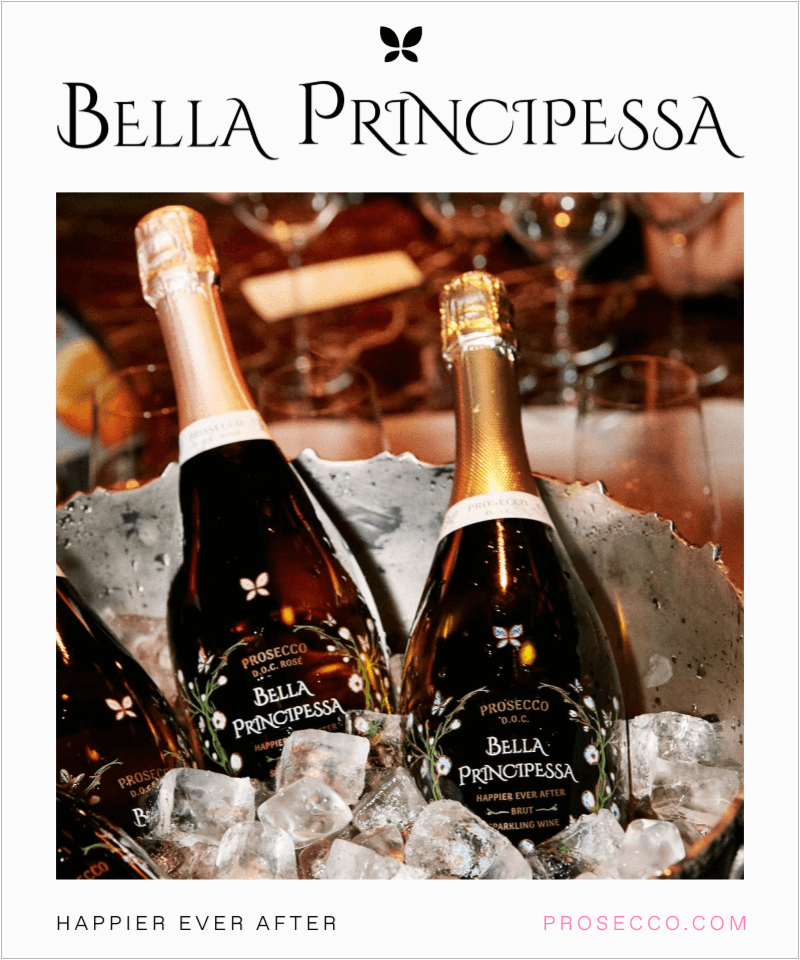
Prosecco Logo Bella Principessa Logo
Buy now Close Icon

Condividi un momento.
Un sorso alla volta.
Made in Italy.

For adults 21+. Please enjoy responsibly.

© 2026 Prosecco.com. Taste the good life. All rights reserved.
Proudly independent.

“Prosecco” is used solely as a geographical and descriptive term referring to the wine style produced in Northern Italy under the recognized PDO and DOC/DOCG designations. Prosecco.com is not affiliated with, endorsed by, or authorized by the Consorzio di Tutela del Prosecco DOC or the Consorzio di Tutela del Prosecco Superiore DOCG

“Bella Principessa” and “Bella Principessa Happier Ever After” are registered trademarks of their respective owners and are used on this website under license for editorial and descriptive purposes only. All other trademarks, logos, and brand names remain the property of their respective owners.

Operated from the United States for U.S. audiences; access from other jurisdictions is at the user’s own initiative and responsibility.

Perché il cava si chiama Cava?

La parola “cava” deriva dalla lingua catalana, parlata nella regione spagnola della Catalogna, dove si produce principalmente Cava. “Cava” significa “cantina” o “grotta” in catalano, che si riferisce al metodo tradizionale di invecchiamento del vino in grotte o cantine sotterranee.

L’uso di questo termine riflette anche che il Cava è un vino tipicamente prodotto in grandi quantità, e le cantine sotterranee forniscono ampio spazio per l’invecchiamento e la conservazione.

La denominazione “Cava” è stata ufficialmente riconosciuta dalla legge spagnola nel 1970 ed è riservata esclusivamente ai vini spumanti spagnoli prodotti con il metodo tradizionale.