
Prosecco Logo Bella Principessa Logo
Buy now Close Icon

Taste The Good Life

For adults 21+. Please enjoy responsibly.

© 2026 Prosecco.com. Taste the good life. All rights reserved.
Proudly independent.

“Prosecco” is used solely as a geographical and descriptive term referring to the wine style produced in Northern Italy under the recognized PDO and DOC/DOCG designations. Prosecco.com is not affiliated with, endorsed by, or authorized by the Consorzio di Tutela del Prosecco DOC or the Consorzio di Tutela del Prosecco Superiore DOCG

“Bella Principessa” and “Bella Principessa Happier Ever After” are registered trademarks of their respective owners and are used on this website under license for editorial and descriptive purposes only. All other trademarks, logos, and brand names remain the property of their respective owners.

Operated from the United States for U.S. audiences; access from other jurisdictions is at the user’s own initiative and responsibility.

Cosa c’entra il pinot nero con il prosecco?

Il Prosecco, uno spumante ottenuto da uve Glera, a volte può contenere Pinot Nero come uva da taglio.

Il Pinot Nero, un vitigno a bacca rossa comunemente utilizzato per la produzione di Champagne e altri vini spumanti, aggiunge colore, sapore e complessità ad alcuni tipi di Prosecco, come il Prosecco Rosé.

Sebbene non tutto il Prosecco contenga il Pinot Nero, esso svolge un ruolo fondamentale in alcune varianti di questo rinomato spumante.
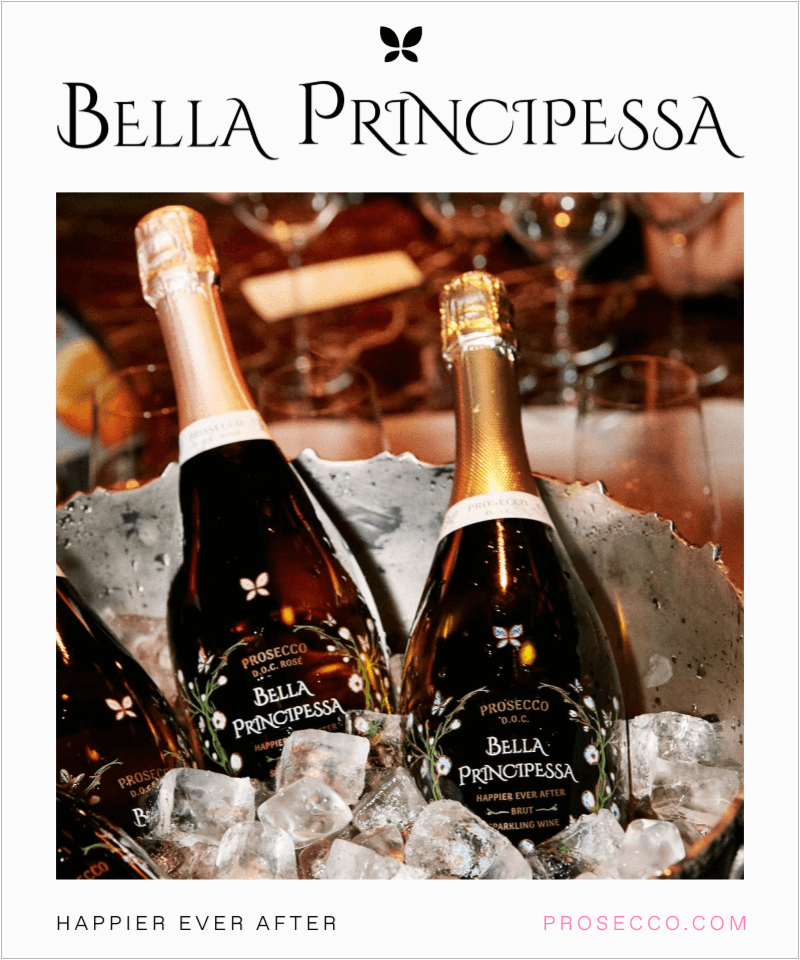
Il Prosecco, uno spumante ottenuto da uve Glera, a volte può contenere Pinot Nero come uva da taglio.

Il Pinot Nero, un vitigno a bacca rossa comunemente utilizzato per la produzione di Champagne e altri vini spumanti, aggiunge colore, sapore e complessità ad alcuni tipi di Prosecco, come il Prosecco Rosé. Sebbene non tutto il Prosecco includa il Pinot Nero, esso svolge un ruolo essenziale in alcune varianti di questo rinomato spumante.